Excite Yokohama 22," a large-scale redevelopment project aimed at creating an urban development suitable for the gateway to an international city, is underway in the area surrounding Yokohama Station, with the Yokohama Station Minami East Exit Area Type 1 Urban Redevelopment Project (tentative name) attracting particular attention. This project, which calls for the construction of a 231-meter-high skyscraper complex in the area that includes the Yokohama Central Post Office, is highly anticipated as a new landmark for Yokohama and a model case for future urban functions. How will this project affect asset values and the living environment for real estate investors, surrounding property owners, and all residents of Yokohama?
In this article, INA & Associates K.K., as a real estate expert, will explain the whole picture of this Yokohama Station Minami East Exit Area Redevelopment Project in an easy-to-understand manner for the general public. From an overview of the project, to the structure of a Type 1 Urban Redevelopment Project, to its impact on the surrounding real estate market, we provide a multifaceted analysis based on the latest information and answer all your questions. We hope this article will help you in your real estate decision-making.
What is the Yokohama Station Minami East Exit Area Type 1 Urban Redevelopment Project?
This is an extremely important project that aims to create new liveliness and international competitiveness at the east exit of Yokohama Station, a transportation node in Yokohama. Let us take a closer look at the specific details of the project.
Basic Outline of the Project
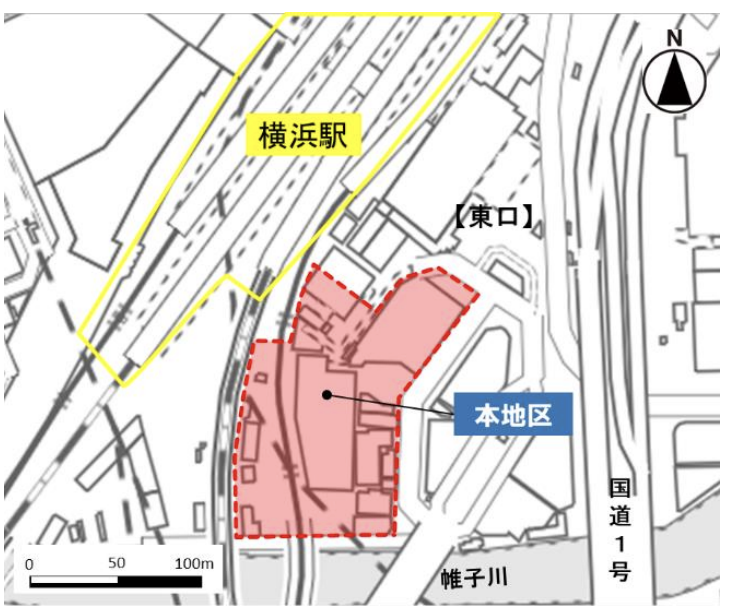
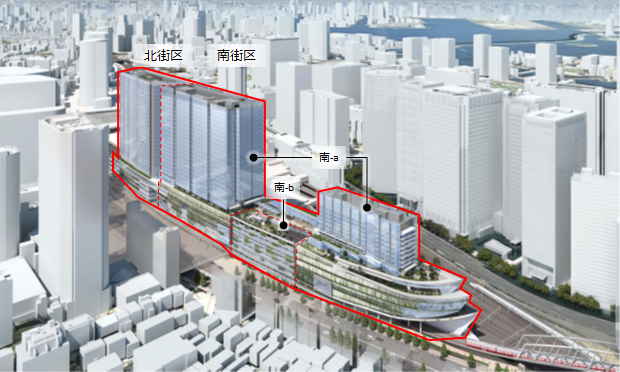
The project covers an area of approximately 1.3 hectares, including the Yokohama Central Post Office, located at Takashima 2-chome, Nishi-ku, Yokohama City. The project entity is the Yokohama Station Minami East Exit Area Urban Redevelopment Preparation Association, which is composed of landowners and chaired by Akira Nonami, President of Sakiyo-Ken Co. The project is chaired by Akira Nonami, president of Sakiyo-Ken Co. The project is being undertaken by companies that have supported the development of Yokohama, including the Japan Post Group, East Japan Railway Company (JR East), and Keihin Electric Express Railway Company (Keikyu), and aims to create a town suitable for the gateway to the international city of Yokohama through the joint efforts of the public and private sectors.
Facility Scale and Details of the Plan
The centerpiece of the project is a skyscraper complex with a height of 231 m, 45 floors above ground and 3 floors below, and a total floor area of 215,000 m2. The building will house highly functional offices that support international corporate activities, a hotel and serviced apartments that offer high quality accommodation, and commercial facilities that provide a new consumer experience. Notably, a "flying car" takeoff and landing site (Vertiport) is planned on the rooftop. This is an early attempt to introduce next-generation transportation infrastructure and has the potential to dramatically improve accessibility both domestically and internationally.
| Item | Outline |
|---|---|
| Project name | (Yokohama Station Minami East Exit Area Type 1 Urban Redevelopment Project (tentative name) |
| Location | Parts of 14, 15 and 16 Takashima 2-chome, Nishi-ku, Yokohama City |
| Owner | Yokohama Station Minami East Exit Area Urban Redevelopment Preparation Association |
| Site area | Approx. 13,000 m2 |
| Total floor area | Approx. 215,000 m2 |
| Building height | Approx. 231m |
| Number of floors | 45 above ground, 3 basement levels |
| Main uses | Offices, hotel, serviced apartments, retail facilities, Vertiport |
Project Schedule
This is a grand project with a long-term perspective: the environmental impact assessment procedure will begin in November 2025, and construction is scheduled to start in 2028. The entire project is scheduled for completion in 2037, and will significantly change the landscape of Yokohama over the next dozen years.
| Month/Year | Contents |
|---|---|
| November 2025 | Environmental Impact Assessment Methodology Report Start of public inspection |
| Fiscal year 2028 (scheduled) | Start of overall construction |
| FY2032 (planned) | Start of new construction |
| FY2037 (planned) | Completion of construction and start of use |
Structure and Benefits of the Type 1 Urban Redevelopment Project
The "Type 1 Urban Area Redevelopment Project" adopted in this project is a method based on the Urban Redevelopment Law, and is an effective mechanism to realize renewal of urban functions and advanced land use while adjusting complex rights relationships. For those who own real estate or are considering investing in real estate, it is very important to understand its benefits.
What is an Urban Area Redevelopment Project?
Urban Area Redevelopment Project is a project to jointly use land, reconstruct fire-resistant buildings, and improve public facilities in an urban area where there is a high concentration of dilapidated wooden buildings or a lack of public facilities. In particular, "Type 1" is characterized by the use of the rights conversion method. This is a method in which the rights to the land and buildings (ownership rights, land lease rights, leasehold rights, etc.) before the project are replaced with the floors of the new building to be completed after the project (rights floors), in proportion to their respective asset values. This allows landowners to enjoy the benefits of redevelopment without having to leave the area.
The project begins with the establishment of a "redevelopment preparatory association" by the landowners. Here, the framework of the project plan is finalized, and after an urban planning decision is made, an official "Urban Redevelopment Association" is established to proceed with the project in earnest.
Advantages for Property Owners
There are many advantages to participating in a redevelopment project as a rightful owner. These go beyond a mere increase in asset value and lead to long-term stable management.
| Advantages | Specifics |
|---|---|
| Increased asset value | Asset value will dramatically increase as aging buildings are transformed into modern buildings with the latest earthquake resistance and disaster prevention features. |
| Preservation of rights | Through the rights conversion method, rights are preserved after the project in the form of condominium interests in the new building, and stable rental income can be expected. |
| Preferential taxation measures | Various tax incentives are available, such as deferral of transfer income tax, reduction or exemption of fixed asset tax and city planning tax, etc., in connection with rights conversion. |
| Relaxation of floor-area ratio | Under certain conditions, the floor-area ratio may be increased to allow for more floor space. |
| Utilization of subsidies | National and local government subsidies are available for a portion of the project costs, thus reducing the burden on individuals. |
Attractiveness for Investors
Urban redevelopment projects are highly attractive investment targets not only for direct right holders but also for real estate investors. Real estate in and around redevelopment areas has great potential for future value appreciation.
Redevelopment will improve infrastructure and convenience. Pedestrian decks and transportation plazas directly connected to stations will attract a flow of people and increase the profitability of commercial facilities. In addition, the advanced design of the buildings will renew the brand image of the entire area, enhancing its reputation as a "desirable place to live" and "desirable place to work," and stabilizing rental demand. Furthermore, buildings constructed with the latest technology are highly disaster-resistant and safe, leading to a reduction in natural disaster risk, which is advantageous from the perspective of long-term asset preservation. The combined effect of these factors is to stimulate investment demand, which in turn leads to higher real estate prices.
Synergistic Effects of Excite Yokohama 22 and Surrounding Redevelopment
It is important to view the redevelopment of the Yokohama Station Minami East Exit area not as a stand-alone project, but as part of Excite Yokohama 22, a grand urban development plan that will enhance the value of Yokohama Station as a whole. The synergistic effect created by the collaboration of multiple projects will have an immeasurable impact on real estate values.
Overview of Excite Yokohama 22
Excite Yokohama 22" is a comprehensive urban development guideline for the Yokohama Station area established in 2009. Yokohama Station is positioned as "the gateway to an international city," and the area around the station is divided into seven areas, with development goals set according to the characteristics of each. Based on this plan, many redevelopment projects have been realized so far, steadily improving the function and attractiveness of Yokohama Station.
| Area Classification | Future Vision (Main roles established in the plan) |
|---|---|
| Center Zone | Gateway connecting Yokohama with the rest of the world (terminal functions and enhanced hospitality) |
| Minami-Saiwai Area | A bustling hub of commerce, culture, and entertainment |
| Kitasaiwai District | Business district where growing companies gather |
| Tsuruya-cho District | A center for a mix of interaction, lodging, and residence |
| Yokohama Portside District | Urban residential area based on the theme of art and design |
| Takashima District | Multifunctional urban complex with business, MICE, hotels, etc. |
| Hiranuma District | Residential and business center with easy access to both the station and MM21 |
Major Redevelopment Projects in the Surrounding Area
In addition to the Minami East Exit District, several other large-scale redevelopment projects are currently underway in the area surrounding Yokohama Station. The potential of the Yokohama Station area as a whole will be dramatically enhanced if these projects work together and enhance each other's value.
| District | Main Project | Outline |
|---|---|---|
| Minami-Saiwai District | Yokohama Minami-Saiwai District Joint Reconstruction Project | A mixed-use complex consisting of a retail facility "CeeU Yokohama" and a residential building, with the retail building to open in December 2023. |
| Kitasaiwai District | Station Oasis Redevelopment | Construction of a skyscraper complex is being considered in conjunction with the redevelopment plan for the area around the Yokohama Central Post Office. |
| Tsuruya-cho District | THE YOKOHAMA FRONT | A 43-story residential/hotel/commercial complex tower, with occupancy beginning in the spring of 2024. |
| Takashima District (MM21) | HARBOR EDGE PROJECT | A complex facility with a luxury hotel and digital aquarium at its core, scheduled for completion in 2028. |
| Takashima District (MM21) | Linkage Terrace Project | A large-scale mixed-use development consisting of offices, a hotel, a vocational school, etc. Construction is scheduled to be completed in 2028 and thereafter. |
Synergistic Effects to Enhance Asset Value
As these large-scale projects approach completion, the real estate market around Yokohama Station will undergo major changes. In fact, expectations for redevelopment are already beginning to be reflected in prices, as evidenced by the 9.84% year-on-year increase in official land prices in Yokohama's Nishi Ward in 2025. The expansion of transportation infrastructure, the increase in the working and social population due to the concentration of office and commercial facilities, and the enhancement of MICE functions to attract international events will be powerful factors in establishing the brand value of the entire area and boosting real estate asset values over the long term.
Real Estate Market Trends and Investment Potential in the Yokohama Station Area
Based on the previous explanations, this section provides a more in-depth analysis of the market trends and future potential of the area around Yokohama Station from the perspective of real estate investment.
Land Price Trends and Market Trends
The real estate market in Yokohama has maintained strong demand due to its easy access to the city center and its unique urban brand. In particular, land prices have been rising notably in redevelopment areas such as the Minato Mirai 21 district and the Yokohama Station area, with the average price of residential land in the entire city of Yokohama reaching 257,000 yen per square meter according to the official land price survey in 2025, and commercial land also recording high growth rates of over 7% year on year. This is evidence that expectations for the future due to redevelopment are strongly driving not only actual demand but also investment demand.
| Area | Land price in 2024 (yen/㎡) | Land price in 2025 (yen/㎡) | Rate of change |
|---|---|---|---|
| Nishi Ward, Yokohama (Commercial land average) | 2,890,000 | 3,170,000 | +9.69% (average of commercial land) |
| Naka-ku, Yokohama (Commercial land average) | 1,850,000 | 1,980,000 | +7.03% Yokohama City, Kanagawa Ward (Commercial land average) |
| Kanagawa-ku, Yokohama (Commercial land average) | 880,000 | 940,000 | +6.82% Yokohama City as a whole (residential land average) |
| Yokohama City as a whole (residential land average) | 245,800 | 257,000 | +4.56% (Note) The above figures differ from actual transaction prices. |
(Note) The above figures are averages and differ from actual transaction prices.
Impact of Redevelopment on Real Estate Values
A series of projects, including the Yokohama Station Minami East Exit Area Redevelopment Project, will have a wide range of positive impacts on real estate values. Dramatic improvements to the transportation infrastructure will facilitate people's mobility, which will directly lead to an increase in business and commercial activity. Enhanced MICE functions that can host international conferences and exhibitions will attract more business people and tourists from home and abroad, increasing demand for hotels and serviced apartments. In addition, enhanced disaster prevention functions will enable business continuity in the event of a disaster, which is an important factor in corporate location selection. The combination of these factors will establish a one-of-a-kind area brand in the Yokohama Station area, and is expected to lead to a sustained increase in real estate values.
Key Factors Investors Should Consider
There are several important points to consider when investing in real estate in the Yokohama Station area. First, these redevelopment projects are long-term projects that will last until the late 2030s. Rather than being concerned about short-term price fluctuations, it is necessary to take a long-term view of how asset values will be formed as Yokohama's urban structure undergoes major transformation.
In addition, the concentration of office and commercial facilities will generate stable rental demand. In particular, a wide range of demand from singles to families can be expected for residences in areas that are both convenient in terms of transportation and living. On the other hand, there are risk factors such as noise and traffic restrictions during the construction period and changes in the overall economic situation in Japan. The key to success is to fully understand these risks and make careful investment decisions based on expert advice.
Conclusion
This article has described the overall picture of the grand urban development project underway around Yokohama Station, centered on the "Yokohama Station Minami East Exit Area Type 1 Urban Redevelopment Project (tentative name)," and the impact it will have on the real estate market.
This redevelopment project is more than just the reconstruction of buildings; it includes important elements that will shape the future of the city, such as innovations in transportation infrastructure, enhancement of international competitiveness, and improvement of disaster prevention functions. In particular, Type 1 urban redevelopment projects using the rights conversion method are an effective way to maximize the value of the entire city while protecting the rights of landowners. The synergistic effect created by the collaboration of multiple projects under the Excite Yokohama 22 concept will boost the value of real estate around Yokohama Station for a long time to come.
Real estate investment is an investment in the future. And its value is nurtured along with the growth of the city. Catching the wave of great change that is about to begin in Yokohama, a city with great potential, may be a unique opportunity for your asset building.
INA&Associates, Inc. is committed to helping you create a prosperous future by investing in the human capital of real estate and by working closely with you to achieve your goals. Please feel free to contact us for any kind of real estate consultation in the Yokohama Station area, as well as for any other real estate concerns you may have. Our experts promise to be your best partner.
Frequently Asked Questions
Q1: When will the Yokohama Station Minami East Exit Area Redevelopment Project be completed?
A1: The overall completion of the project is scheduled for fiscal 2037. However, this is subject to change depending on the progress of construction.
Q2: What is a Type 1 Urban Area Redevelopment Project?
A2: Based on the Urban Redevelopment Law, a Type I Urban Redevelopment Project is a project to improve an aging urban area. In particular, "Type 1" is characterized by the use of a "rights conversion method" in which the landowner's rights to land and buildings are replaced with the floors (rights floors) of a newly completed building in proportion to its asset value.
Q3: To what extent have property values in the surrounding area increased?
A3: Commercial land in Yokohama's Nishi Ward has seen a marked increase in prices due to expectations for redevelopment, as evidenced by the 9.84% year-on-year increase in official land prices for the year 2025. We anticipate that prices will remain steady as the project progresses.
Q4: What is a Vertiport?
A4: A Vertiport is a facility for electric vertical takeoff and landing (eVTOL) aircraft, known as "flying cars," to take off and land. It is expected to be a next-generation urban transportation system, and has the potential to significantly shorten access to city centers and airports.
Q5: What should I be aware of when considering real estate investment?
A5: Redevelopment projects are long-term in nature, so it is important to assess the city's growth potential and future rental demand over the long term, not just from a short-term perspective. It is also advisable to fully consider risk factors such as the impact during the construction period and overall economic trends, and to consult with professional advice.

Daisuke Inazawa
Representative Director of INA&Associates Inc. Based in Osaka, Tokyo, and Kanagawa, he is engaged in real estate sales, leasing, and management. He provides services based on his extensive experience in the real estate industry. Based on the philosophy that “human resources are a company's most important asset,” he places great importance on human resource development. He continues to take on the challenge of creating sustainable corporate value.
.png)