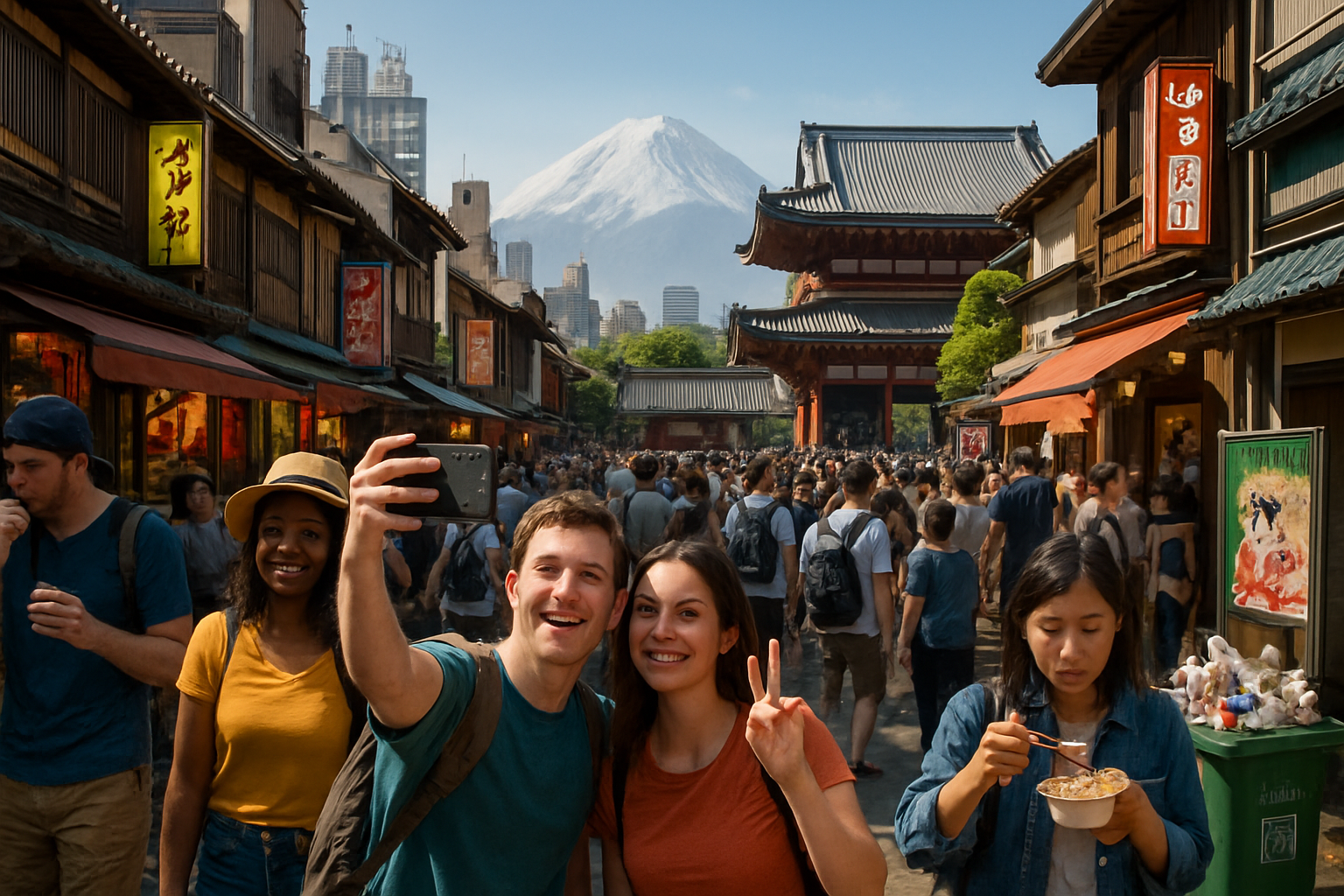
In recent years, tourist destinations throughout Japan have been bustling with the large number of inbound visitors to Japan. It is predicted that the number of inbound visitors to Japan will exceed 40 million per year by 2025 as part of the government's efforts to realize a "tourism-oriented nation," and there is no doubt that this is a bright light for the Japanese economy. However, behind this spectacular boom, have you noticed a quiet but definite change taking place in the real estate market, which is so close to our daily lives?
Overtourism, or the excessive concentration of tourists, is not only causing "tourism pollution" such as traffic congestion and garbage problems, it is also putting pressure on the lives of local residents by causing real estate prices and rents to soar. This is no longer a problem limited to a few tourist destinations. In this article, as a real estate expert, I will reveal the mechanism of how overtourism affects the real estate market and take a deep look at the current situation and the future we must face.
Mechanism of Overtourism Driving Up Real Estate Prices
So why does overtourism directly lead to higher real estate prices? The mechanism proceeds in three main stages.
Linkage between inbound demand and the real estate market
The first step is a surge in demand for lodging. As the number of foreign visitors to Japan increases, demand for hotels and inns begins to outstrip supply. This trend is particularly pronounced in urban areas with convenient transportation. As a result, the prices of existing lodging facilities will skyrocket, and in search of higher profitability, condominiums and other properties that were previously on the market as ordinary rental housing will be converted into private accommodations or monthly condominiums for short-term visitors at an accelerated pace.
For example, the rent for a studio apartment in Osaka City is usually 60,000 yen per month, but it is not uncommon for the rent to more than double by operating it as a private accommodation. The spread of this type of activity reduces the number of properties in the rental market as a whole, resulting in an imbalance between supply and demand and pushing up the overall rental market.
The reality of price hikes due to the "tourist attraction premium
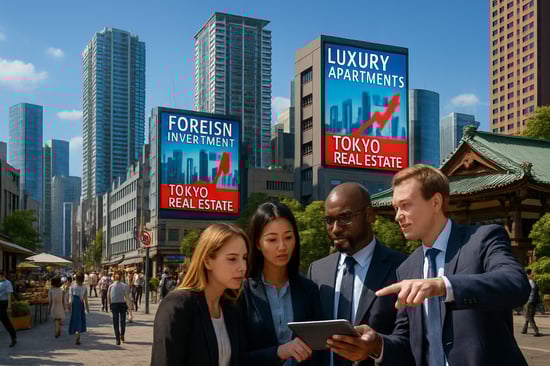
Second, foreign investors are becoming more active in purchasing real estate. Real estate in Japan remains undervalued compared to major cities in other countries, and the weak yen is spurring this trend. Combined with the safety and cultural attractions, Japanese real estate is seen as a very attractive investment target, especially by wealthy Asian investors.
The Niseko area in Hokkaido is a typical example, but in recent years, there has been a noticeable trend in areas such as Kyoto, Osaka, and central Tokyo for these individuals to purchase real estate for investment purposes or as a second home. This influx of investment money, which is different from actual demand, has caused prices to rise in certain areas, creating what might be called a "tourist premium," pushing up overall land prices. As a result, it is becoming extremely difficult for Japanese people to purchase real estate in popular areas anymore, except for a very few wealthy individuals.
The Impact of Rising Rents on Local Communities
As a final step, skyrocketing real estate prices and rents begin to have a serious impact on local communities.
These skyrocketing rents hit those living in the area, especially young people and families raising children, whose incomes are limited. As a result, they find it difficult to continue living in the city center and are forced to relocate to the suburbs where rents are lower. This is a very worrisome situation that could once again trigger the "doughnut phenomenon," which reduces the vitality of cities. The exodus of people who once supported the local community and the city becoming a place only for tourists can shake the very foundations of a city's sustainability.
Not Just a Shadow, Overtourism Opens Up New Possibilities for Real Estate Investment
Although we have focused on the negative aspects of overtourism, there are always both light and shadow sides to every situation. From the perspective of real estate investment, it is also true that this great wave of change means the arrival of new business opportunities.
From a different perspective, it is a business opportunity
The strong inbound demand offers great potential for investment in lodging facilities. A variety of investment strategies are possible, including the aforementioned conversion to private accommodations and monthly condominiums, the development of small boutique hotels, or the renovation of existing buildings to revitalize them as value-added lodging facilities. The increase in the number of tourists will also stimulate demand for commercial facilities such as restaurants and shops. In addition to simply renting out the property as a residence, it may be possible to attract tenants targeting tourists in order to achieve higher profitability.
The key is to accurately read market changes and determine the areas and types of properties where demand can be expected. For example, there are still many untapped areas of the market, such as areas lacking large hotels for groups, or unique accommodations focused on individual travelers (FIT) seeking experiential consumption.
What is real estate development that coexists with sustainable tourism?
However, I would like to strongly emphasize that we must not pursue short-term profit. Development that pursues only short-term profitability and ignores harmony with the local community will surely fail in the long run. If it creates friction with local residents and undermines the attractiveness of the town, tourists will eventually leave, and as a result, the asset value of the real estate itself may be damaged.
At INA & Associates, our corporate philosophy is to be a "Human Capital Investment Company. This is an expression of our firm determination to pursue sustainable growth and prosperity not only for our employees and clients, but also for all people involved in our business and the community as a whole. In real estate development, we respect the history and culture of the land, contribute to the local economy, and consider the living environment of the residents. We are convinced that such efforts based on a long-term perspective will truly enhance the asset value of real estate and create "valuable assets" that will be passed on to the next generation.
What will the national and local governments do? Future-Focused Measures
The national and local governments are not sitting idly by and letting the global issue of "overtourism" go unaddressed. Various measures are being sought to strike a balance between the sometimes conflicting elements of "housing" and "tourism.
Finding a Balance between "Housing" and "Tourism
The most representative example is the "lodging tax," which is levied on overnight guests. The Tokyo Metropolitan Government, Osaka Prefecture, Kyoto City, and other cities have already introduced such a tax, with the aim of using the tax revenue to improve tourism infrastructure, address congestion, and return profits to local residents. In addition, the New Act on Residential Accommodation Business (the "New Act") has a "180-day rule" that limits the number of operating days per year to 180 days, but some local governments have begun to impose even stricter regulations (e.g., allowing business only during specific periods or prohibiting business in residential areas) by ordinance.
As a further measure, the introduction of "entry fees" to control entry to certain tourist attractions is also being considered.
| Countermeasures | Domestic Cases | Overseas cases (reference) | Purpose/Effect |
|---|---|---|---|
| Tax measures | Lodging tax (Tokyo, Osaka, Kyoto, etc.) | Tourism tax (Amsterdam, Venice, etc.) | Securing financial resources for tourism infrastructure development, reducing demand |
| Regulations/access restrictions | Restrictions on the number of business days and areas for private accommodations, restrictions on access to Mt. | Restrictions on cruise ship calls (Venice), suspension of new permits for private accommodations (Barcelona) | Control of the number of physical tourists, preservation of living environment |
| Fee setting | Consideration of raising fees for foreigners at Himeji Castle (after discussion, modified to a system where fees are divided between citizens and out-of-town residents) | Price difference by nationality (e.g. Machu Picchu) | Demand control, securing of cultural asset maintenance costs, consideration for local residents |
| Information dissemination and guidance | Real-time distribution of congestion information (Kyoto, etc.) | Campaigns to encourage tourists to disperse | Temporal and spatial leveling of tourism demand |
These measures are an important step toward ensuring fairness in the benefits and burdens borne by tourists and ensuring that the entire region enjoys the benefits of tourism. When investing in real estate, it is essential to keep a close eye on these regulatory trends in each municipality and factor future changes in the business environment into your projections.
Conclusion: What We Must Consider for a Sustainable Future
This article has discussed the multifaceted impact of overtourism on the real estate market. While the growth of inbound demand is a great boon to the Japanese economy, we cannot turn a blind eye to the reality of the distortions it is creating in local communities through skyrocketing real estate prices and rents.
This issue should not be discussed in terms of a dichotomy between tourists and residents, investors and consumers. What is important is the perspective of how the economic activity of tourism and the local community where people live can coexist in a sustainable manner. As a real estate professional and business manager, I believe that the key to solving this problem lies in people. We must pursue the happiness of all the "human resources" involved, including the people who live, work, and visit the area, without being preoccupied with short-term profits. We believe that business activities based on such a long-term perspective will lead to a truly valuable society and assets for the future.
The issues of over tourism and real estate are themes that each of us, as a concerned citizen, should consider regarding our own homes and assets, as well as the state of society.
Frequently Asked Questions (Q&A)
- Q1:Will the prices of real estate in tourist areas continue to rise?
- A1:While the overall upward trend is expected to continue, there will be more polarization depending on the characteristics of the area and the property. In particular, areas with convenient transportation and unique attractions are likely to remain strong. However, it is difficult to make a blanket statement because there are risk factors such as tightening of regulations by local governments and changes in the international situation. It is essential to make decisions based on detailed market analysis by experts.
- Q2:Is it a good idea to purchase real estate in a tourist area in the future?
- A2:For investment purposes, the key to success is to have a detailed strategy and exit strategy (sale). You should consider a multifaceted income model that includes not only the expectation of price appreciation, but also income gains from operations such as private accommodations and stores. For residential purposes, future increases in living costs and changes in the living environment should also be taken into consideration, and decisions should be made carefully in light of long-term life plans.
- Q3:Is there anything an individual can do to counteract overtourism?
- A3:As a real estate owner, you are required to operate your property with an awareness of coexistence with the local community. For example, when operating private accommodations, it is important to enforce rules for garbage disposal and ask guests to be considerate of noise. Also, as a consumer, keeping in mind "dispersed tourism" by avoiding crowded times and periods is an effective action to reduce the burden on the local community.

Daisuke Inazawa
Representative Director of INA&Associates Inc. Based in Osaka, Tokyo, and Kanagawa, he is engaged in real estate sales, leasing, and management. He provides services based on his extensive experience in the real estate industry. Based on the philosophy that “human resources are a company's most important asset,” he places great importance on human resource development. He continues to take on the challenge of creating sustainable corporate value.
.png)