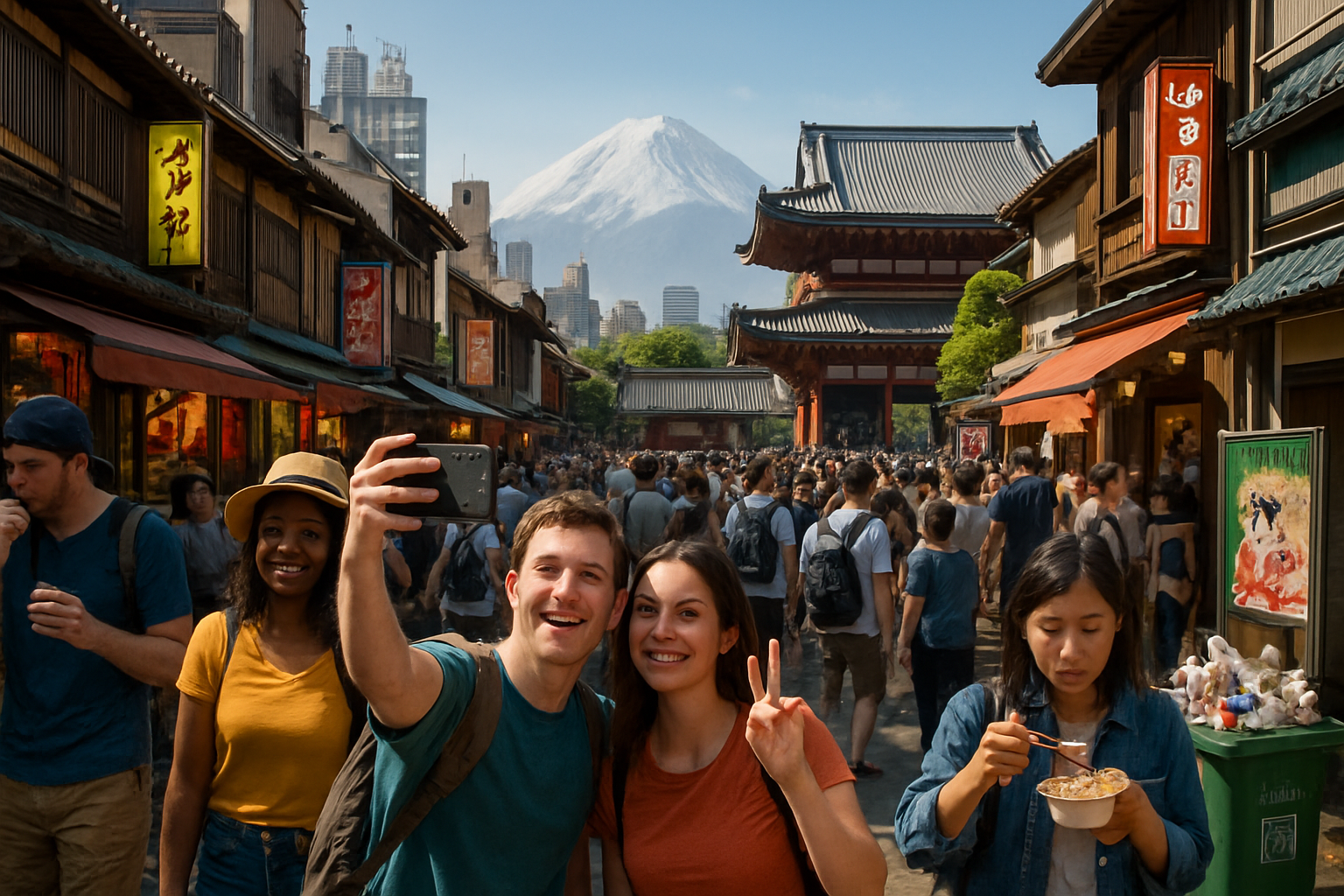
In recent years, the recovery of inbound demand has made Japan's tourist destinations more vibrant than ever before. However, did you know that, on the other hand, a problem known as "over tourism pollution" is casting a serious shadow over local communities? The concentration of more tourists than allowed in a particular tourist area has a wide range of effects, including paralysis of transportation systems, noise, garbage problems, and abnormally high real estate prices. In this article, from the perspective of a real estate professional, we will explain how overtourism affects local communities, especially the real estate market, and discuss the future of "sustainable tourism" that we should consider both as companies and individuals.
The Diverse Impacts of Overtourism on Local Communities
The problems caused by overtourism cannot be dismissed in terms of mere "overcrowding. It is a complex issue that shakes the foundations of local residents' lives and even threatens the survival of communities that have been nurtured over many years.
Deterioration of the living environment: loss of daily peace of mind
The most direct impact is the deterioration of the living environment of local residents. Buses and trains used for commuting to work and school are always packed with tourists carrying large luggage, making even on-time travel difficult. Late-night noise, bad manners caused by differences in culture and customs, and littering not only damage the local landscape, but also rob residents of their mental peace of mind. The order of the local community itself is threatened by the frequent occurrence of problems such as unauthorized trespassing on private property.
Distortion of the real estate market: Soaring land prices and exodus of local residents
As a real estate specialist, I am particularly concerned about the impact on the real estate market. An increase in tourism stimulates demand for lodging and commercial facilities, which in the short term drives up land prices and rents. In fact, major tourist destinations have reported rapid increases in land prices on the back of inbound demand.
| Region | Land Price Fluctuation | Main Factors |
|---|---|---|
| Kyoto City (especially Higashiyama and Nakagyo wards) | Significant increase mainly in commercial areas | Acceleration of development of hotels and simple lodging and opening of stores for inbound customers |
| Hokkaido (Niseko and Furano) | Influx of foreign capital has caused land prices to skyrocket | Demand for vacation homes and condominiums by wealthy foreigners seeking powder snow |
| Okinawa Prefecture | Upward trend mainly in resort areas | Demand for hotel development and resort properties due to increase in domestic and international tourists |
However, this price hike is a serious threat to people living in the area. In addition to increasing the burden of property taxes, rising rents cause the phenomenon of "gentrification" (the eviction of residents due to gentrification), which forces residents who have lived on the land for generations and those who have run businesses in the area to leave their familiar places of residence. As a result, the local community is hollowed out and the original charm and vitality of the town is lost. We believe this is a risk that cannot be overlooked when considering the long-term value of real estate.
Why does overtourism occur? Exploring the Root Causes
To address this problem, we must first understand its root causes. Overtourism is not caused by a single factor, but by a complex interplay of multiple events.
First is the "surge in inbound demand" due to the depreciation of the yen and the proliferation of low-cost carriers (LCCs). For international travelers, travel to Japan has become easier and more attractive than ever before. Second is the explosive spread of information through social networking sites such as Instagram and TikTok. There is no end to the number of cases where a single photo or short video of a previously unknown place has suddenly become a popular spot worldwide, attracting a flood of tourists. Third, many regions are facing the challenge of "inadequate reception systems" to welcome tourists. Transportation infrastructure, accommodations, and multilingual support have not kept pace with the rapidly growing demand. The combined effects of these factors are creating what could be called "tourism pollution" in many regions.
Solutions to Achieve Sustainable Tourism
So how should we face this difficult challenge? The important thing is not to deny tourism altogether, but to seek a form of "sustainable tourism" that can coexist with local communities. In Japan and abroad, governments and private companies are already working together to implement a variety of measures to address this issue.
| Countermeasure Category | Specific method | Examples |
|---|---|---|
| Diversification of demand | Off-season attraction promotion Promotion of excursions to neighboring areas Discounted admission by time of day |
Kyoto City: Diversification of means of transportation by operating sightseeing express buses |
| Strengthening of regulations and management | Limit the number of visitors and introduce a complete reservation system Introduction or increase of "tourism tax" or "accommodation tax Strengthening of regulations on private accommodations |
Barcelona (Spain): Ban on new hotel construction, restrictions on cruise ship calls |
| Use of Technology | Real-time distribution of congestion information Multilingual tourism apps Demand forecasting using AI |
Kamakura City (Japan): Social experiment to give residents priority access to train stations |
These measures aim to improve the quality of the visiting experience and reduce the burden on local residents while imposing certain restrictions on tourists. For example, admission restrictions and reservation systems reduce crowding and provide an environment in which each individual can comfortably visit. In addition, by reinvesting the financial resources obtained through lodging tax and other means in improving the local environment and infrastructure, it is possible to create a virtuous cycle in which the benefits of tourism are shared throughout the region.
In summary, as a real estate professional, I think about the future of tourism and urban development.
Overtourism is an urgent issue that can have unfortunate consequences for all three parties: tourists, local residents, and businesses. Especially from the perspective of real estate, we need to keep asking ourselves whether the intrinsic value of the land, i.e., "the appeal that makes people feel comfortable living there and want to visit," will not be lost, rather than being distracted by short-term price increases.
We at INA & Associates believe that the essence of corporate management is not the pursuit of short-term profit, but the pursuit of sustainable growth based on a clear vision. This is true in our real estate business and in considering the future of tourist destinations. Without coexistence with local communities, the long-term value of real estate cannot be maintained and enhanced. It is precisely the future that requires the government, local residents, and private companies such as ours to work together to build a future where the economic activity of tourism and the peaceful life of the local community are in harmony.
The value of real estate depends not only on the building or land itself, but also on the environment and community surrounding it. If you have concerns about over tourism, maintaining and improving asset value, or utilizing real estate from the perspective of sustainable urban development, please contact us, INA & Associates, Inc. We will contribute to your valuable assets and future with our expert knowledge.
Frequently Asked Questions
- Q1. What specific properties does overtourism affect?
- A1. The most directly affected properties are lodging facilities such as hotels and inns, and commercial facilities such as restaurants and souvenir stores. While development is proceeding in anticipation of increased demand for these facilities, rents are rising and living conditions are deteriorating in surrounding residential areas, which may result in a change in the values of residential real estate as well.
- Q2. If my property is located in a tourist area, what measures should I consider?
- A2. It is important not only to focus on short-term increases in rental income, but also to fulfill your responsibilities as a member of the local community, such as ensuring that guests and tenants comply with local rules and etiquette. Building a good relationship with the local community is essential to maintaining long-term asset value.
- Q3. How will the lodging and tourism taxes affect property owners?
- A3. There may be concerns that the increased tax burden will be passed on to lodging rates and reduce profitability. However, if the tax revenue is used to improve the local environment and infrastructure, and the attractiveness of the area as a tourist destination is enhanced, this aspect can be expected to lead to higher real estate values in the long run.
- Q4. Will real estate regulations be tightened in the future as a measure against overtourism?
- A4: Some local governments have already set upper limits on the number of business days for overnight stays and restricted the construction of hotels in certain areas. It is quite possible that more in-depth regulations on real estate use will be introduced in the future, such as a review of zoning (zoning system), depending on the actual conditions of the region.

Daisuke Inazawa
Representative Director of INA&Associates Inc. Based in Osaka, Tokyo, and Kanagawa, he is engaged in real estate sales, leasing, and management. He provides services based on his extensive experience in the real estate industry. Based on the philosophy that “human resources are a company's most important asset,” he places great importance on human resource development. He continues to take on the challenge of creating sustainable corporate value.
.png)