Many landlords are currently competing in the market with only one product brand, "rental housing. However, with diversifying tenant needs and an intensifying market environment, it is becoming increasingly difficult to secure sustainable profitability with a one-size-fits-all approach. In this article, INA & Associates, Inc. provides landlords with a professional and practical perspective on three specific differentiation strategies to break away from dependence on a "single brand" in rental management and dramatically increase profitability. These strategies include: high-end rentals that are not bound by market prices , monetization of difficult properties that everyone else shies away from , and a specialized management model that focuses on specific demand. We are confident that a deep understanding of these strategies will open up new possibilities for your rental business.
Structural Challenges of "Single Brand" Strategies
At first glance, it may seem efficient to manage all properties under a single category of "rental housing. However, this strategy poses a major challenge in that it makes it easy to get caught up in the homogenization competition in the market and, as a result, is constantly under pressure to lower rents.
If new buildings are built in the neighborhood, the value of existing properties declines relative to their value, and the company is often forced to lower rents in order to recruit tenants. In order to escape from this war of attrition, it is essential to give your property portfolio a "different personality" and build a rental management brand that strongly appeals to a specific target group.
Strategy 1: Specialization Strategy for High-End
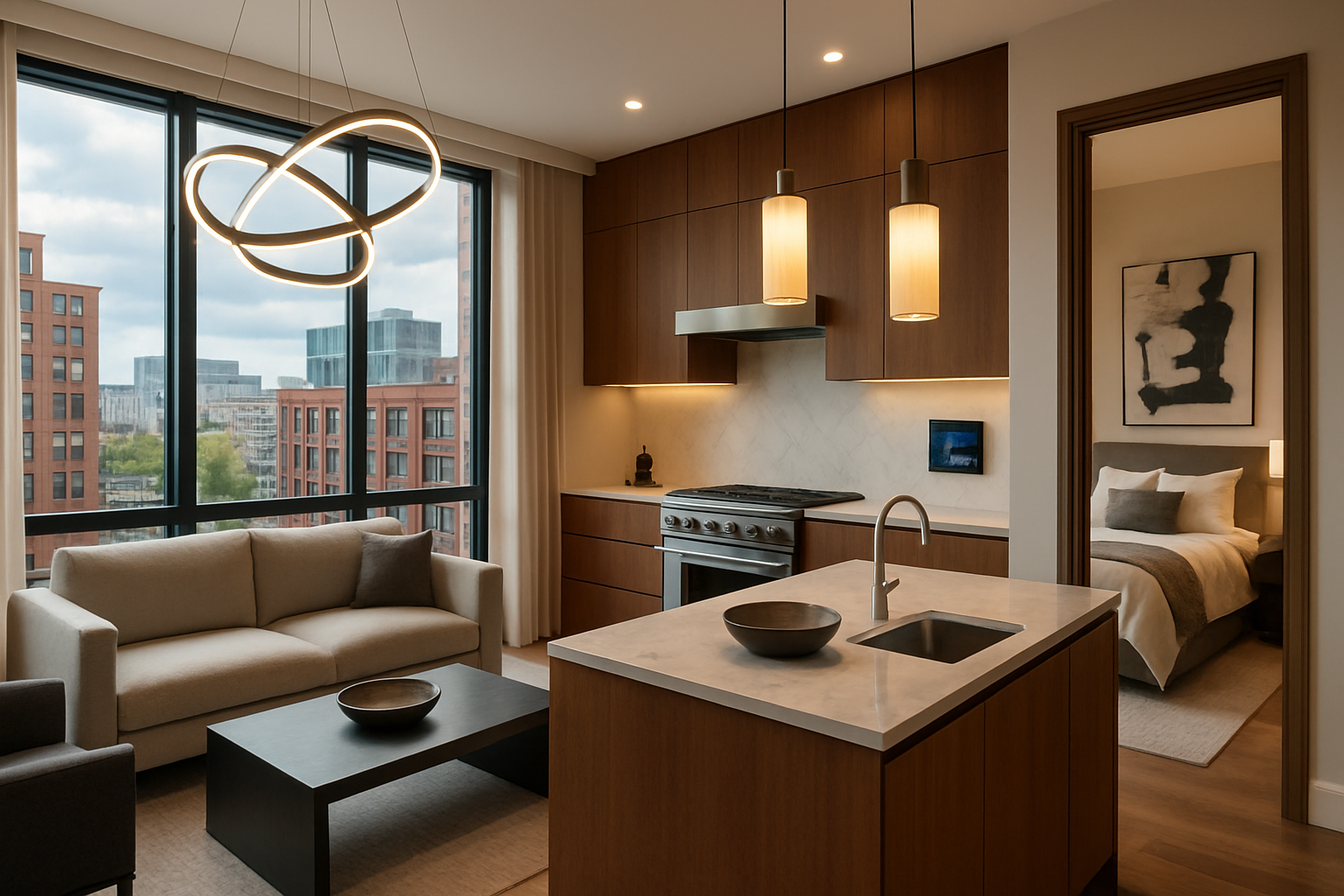
The first strategy is high-end leasing, which targets the affluent and those with specific lifestyles by thoroughly upgrading interiors and facilities. The core of this strategy is to consciously distance oneself from the concept of "market price" and set rent based on the unique value of the property. For example, the latest smart home technology, interior design by a well-known designer, or professional kitchen equipment, are all value-added features that will resonate with the target demographic.
This approach is expensive in terms of initial investment, but once the brand is established, it is less susceptible to economic fluctuations and can be expected to generate stable, high returns over the long term. The key is to thoroughly research the needs of the target demographic and achieve "outstanding specifications" that will make them strongly desire to live in this room. Half-hearted renovations not only fail to recoup the investment, but also risk failing to build a brand image.
| Item | General rental housing | High-end rental |
|---|---|---|
| Target demographics | Wide range of people (singles, families, etc.) | Wealthy, executives, professionals, etc. |
| Approach to rent setting | Based on the surrounding market price | Based on the unique value of the property (not linked to the market) |
| Interior and facilities | Standard specifications | High-quality materials, designer, state-of-the-art facilities |
| Initial investment | Relatively low | High |
| Profitability | Stable, but competitive | High profitability expected |
| Risks | Vacancy risk, risk of rent decline | High initial investment, limited target demographic |
Strategy 2: Specialized management of irregularly shaped land and difficult properties
The second strategy is to acquire properties at low prices on irregularly shaped land or properties with difficult conditions that many investors avoid, and to specialize in management that takes advantage of these characteristics. For example, properties that cannot be reconstructed and land with leasehold rights have extremely low market prices due to the complexity of the rights. However, with the right knowledge and strategy, these properties can be converted into high-yielding income sources.
Although large-scale renovations are not possible for non-renovable properties, renovations can be made to the extent that building permits are not required, and the property can be rented out as a studio for creators or as a space for hobbies and interests. In addition, if the property is leased land, it is effective to establish a good relationship with the landowner and pursue a leasehold management strategy that aims for stable income over the long term. Although monetization of these difficult properties requires a high level of expertise and negotiation skills, it is a blue ocean market with little competition, and when successful, the return on investment is immeasurable.
| Property Type | General Challenges | Ideas for specialized operations |
|---|---|---|
| Property that cannot be rebuilt | Cannot be rebuilt, difficult to obtain financing | Atelier for creators Garage house for hobbyists Warehouse, stock room |
| Leasehold property | Complicated rights relationship, land rent payment | Long-term operation as a detached house rental Joint venture with landowner Capital gain through sale and purchase of rights |
| Unevenly shaped land | Restrictions on building design, difficult to utilize | Unique design of detached houses that take advantage of the deformation Parking lot and laundromat business Establishment of container house |
Strategy 3: Build an operation-specific brand
The third strategy is to specialize in the software (operational methods) when it is difficult to differentiate the hardware (location and building) of the property. Specifically, this approach is to switch some of the properties to a brand dedicated to overnight/monthly stays to capture demand from short-term visitors. This specialized management strategy targets a different market from that of regular leasing contracts, and thus has the potential to create a new earnings pillar without competing with the existing portfolio.
In particular, properties located near tourist attractions or business districts can expect steady demand from travelers and business travelers. Operating a private home or monthly apartment requires more effort than usual, including complying with regulations such as the Ryokan Business Law and the Residential Accommodation Business Law, frequent cleaning and linen changes, and marketing activities to attract customers. However, since the unit price per day can be set higher, the occupancy rate can be increased to achieve much higher profitability than in a regular rental. Success depends on identifying the target clientele (e.g., business travelers, family travelers) and being able to provide services that meet their needs.
In Summary: A Rental Management Compass for the Future
In this article, we have presented three specific differentiation strategies to move away from management that relies on a single product brand, "rental housing. High-end leasing is a strategy that aims for high profitability by offering value beyond the market price. Specialized management of difficult properties is a strategy to establish a unique position in a market with little competition. The management specialization is a strategy to create new demand by differentiating itself from the competition in terms of software. Each of these strategies has different risks and returns, but they all have one thing in common: they all focus on the "what, how, and to whom" of their offerings.
Which strategy best fits your portfolio, the characteristics of your region, and most importantly, your own vision as a landlord? By flexibly combining these approaches, rather than sticking to one strategy, you can create a more robust and profitable differentiation of your real estate investments. Rather than fearing changes in the market, the future of rental management requires an attitude of proactively taking advantage of change as an opportunity.
Frequently Asked Questions (Q&A)
Q1: What exactly is the initial investment required for a high-end rental property?
A1: It is difficult to say, but in most cases, 1.5 to 3 times the cost of a typical renovation is a good guideline. However, what is important is "return on investment" rather than the amount of money. The key to success is to determine the points where you can maximize the solvency and satisfaction of your target audience, and to design a design that makes a clear distinction between areas where you should spend money (e.g., kitchen, bathrooms) and areas where you should not (e.g., kitchen, bathrooms).
Q2: Is it really possible to monetize a non-renovable property? Isn't it too risky?
A2: Certainly there is risk. However, it is a matter of professional skill to accurately assess the risk and keep it under control. For example, for the risk of difficulty in obtaining financing, we will consider using our own funds or non-bank financing. Also, the difficulty of exit strategies (sale) can be covered by creating an income plan based on the assumption that the property will be held for a long time. Above all, it is important to take advantage of the greatest benefit of significantly low market prices. We strongly recommend that you consult with a specialist before purchasing.
Q3: I am interested in operating a private residence, but I don't know where to start.
A3: First, please check the ordinances of the municipality in which your property is located. Rules on whether or not private accommodations are allowed and how they are operated vary greatly from region to region. Then, you will need to submit a notification based on the Residential Accommodation Business Law (the new law for private accommodations) or apply for a permit under the Ryokan Business Law. There are a number of management companies that can attract guests, clean up, and handle guest relations on your behalf, so it is a good idea to start by talking to several companies and finding the right partner that fits your style.
Q4: I cannot decide which strategy is right for me. Can you consult with me?
A4: Of course, INA & Associates, Inc. provides consulting services on the best real estate strategy for your individual situation. If you join the INA Network, we will answer all your questions about real estate management, including those mentioned in this article, as long as you follow the rules. We will do our best to support your challenges, so please feel free to contact us.
We look forward to your participation in the Oyaokai (INA Network). If you join the Ouya-Kai, we will answer all your questions as long as you follow the rules. We at INA & Associates are committed to your success in real estate management.

Daisuke Inazawa
Representative Director of INA&Associates Inc. Based in Osaka, Tokyo, and Kanagawa, he is engaged in real estate sales, leasing, and management. He provides services based on his extensive experience in the real estate industry. Based on the philosophy that “human resources are a company's most important asset,” he places great importance on human resource development. He continues to take on the challenge of creating sustainable corporate value.
.png)