The success or failure of real estate leasing depends on a proper marketing strategy. In particular, the "property photo," which is the first exposure potential tenants have to property information, is an extremely influential factor in the subsequent decision-making process. In this article, INA & Associates, Inc. explains the strategic importance of property photos from the perspective of the marketing pipeline in real estate leasing. We will even introduce specific photography tips to maximize the appeal of a property, leading to an application for a viewing and then a contract signing.
Real Estate Leasing and Marketing Pipeline Basics
Real estate leasing is not just a term used to refer to the brokerage business of leasing properties. It refers to a series of overall strategic activities to maximize the value of a property and secure a stable revenue stream. At its core is the concept of the marketing pipeline.
The marketing pipeline is a step-by-step visualization of the series of processes that lead potential customers to recognize a property and ultimately sign a contract. By optimizing this pipeline, it is possible to prevent abandonment at each stage and increase the closing rate. The general pipeline in real estate leasing can be organized as shown in the table below.
| Pipeline Stage | Main Contents | Key Performance Indicators (KPI) |
|---|---|---|
| 1. property solicitation | Property information is posted on portal sites, etc., to gain wide recognition. | Number of times advertisements are displayed, number of clicks |
| 2) Brokerage property referrals | Provide detailed information on properties to customers who inquire about them. | Response rate to inquiries, number of requests for information materials |
| 3. consideration and preview | Customers consider previewing properties based on the information provided, and actually visit the properties. | Rate of applications for previews, rate of previews conducted |
| 4. application and contract | After previewing the property, the customer decides to move in, and the application process leads to the conclusion of a contract. | Application and closing rates |
The key to successful leasing is to have each stage work together smoothly and lead customers to the next stage. Visual information, i.e., property photos, strongly supports this process.
Importance of setting the market price at the property solicitation stage
At the property solicitation stage, which is the gateway to the pipeline, it is essential to set appropriate rents. If the rent is far from the market price, no matter how attractive the property is, it will not be considered by potential clients. The first step in marketing is to accurately grasp the market price and set a competitive price.
It is important to note, however, that price is not everything. If there are multiple competing properties in the same price range, what will customers base their comparisons on? Here, the quality of the property photos is a decisive differentiating factor.
The Role of Photographs during the Brokerage Property Introduction Phase
When a potential client is interested in a property and makes an inquiry to a real estate broker, the first information provided is a property description and photos. At this stage, photos are not merely "room records," but also serve as "presentation materials that convey the value of the property.
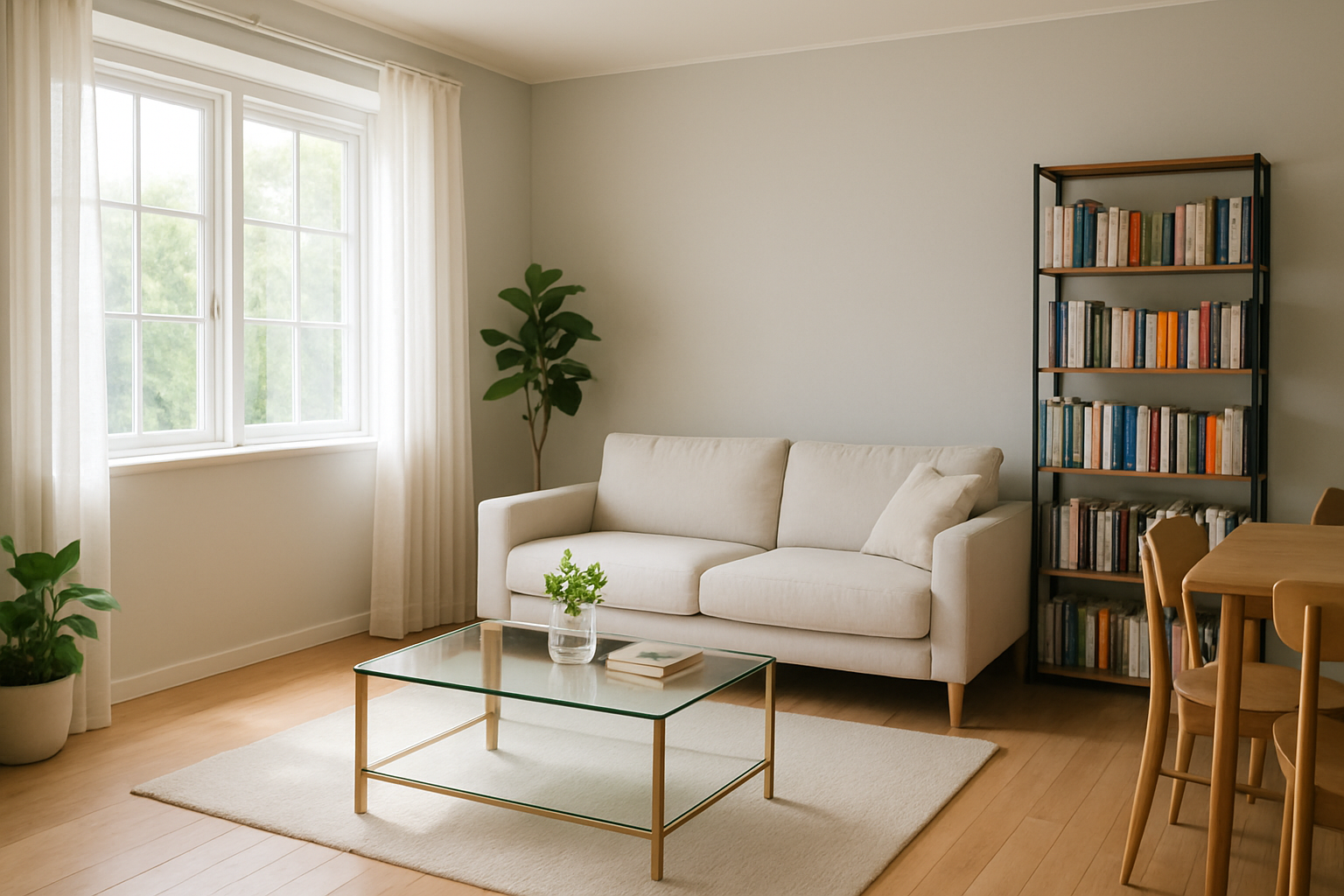
For example, suppose there are two properties with the same layout and the same rent. One is dimly lit and has a lived-in feel. The other is bright, clean, and attractive, with furniture arranged in an imaginative way. Which one would the client want to see in person? The answer is obvious.
Attractive photos create a sense of anticipation and stimulate the customer's positive imagination about what life would be like if they lived in the property. This is a powerful motivator to elicit the next action of applying to view the property.
The Impact of Photo Quality on Considerer Behavior
The quality of property photos has a direct impact on the rate of progress in the marketing pipeline. Low-quality photos can discourage customer interest, leading to disengagement from the website and a reduced willingness to inquire about the property. High-quality photos, on the other hand, increase customer engagement and smooth the transition to the next stage of the pipeline.
| Photo Quality | Customer psychology and behavior | Impact on pipeline |
|---|---|---|
| Low | Negative impressions such as "looks old," "looks cramped," or "looks poorly managed." Customers leave before looking at detailed information. | Opportunity loss occurs because they do not make an inquiry. |
| High | Positive impressions such as "bright," "clean," and "stylish. The expectation of the interior and facilities rises, and the respondents wish to preview the rooms. | The application rate for previews increases, and the likelihood of a contract being signed increases. |
In this way, photos are more than just visual information; they are a strategic tool that influences customer emotions and behavior. This is especially true today, when online property searches have become mainstream.
The process from application to contract
When an attractive photo gets a customer to apply to view a property, you have taken a big step toward closing the deal. The viewing is an important opportunity to confirm the expectations of the customer based on the photos and to solidify the customer's intention to move into the property.
The key here is to eliminate the gap between the photo and the real thing. Excessive manipulation or exaggerated photos that make the property appear larger than it actually is will disappoint the customer and undermine trust. Photographs should only be used to convey the "true appeal" of the property.
If the client is satisfied with the preview, he or she will proceed to the application stage and then to the contract stage. Even at this final stage, the photos presented at the time of application may be used as reference material when confirming the details of the contract or when considering the interior design after the tenant has moved in. Photographs continue to play an important role from the beginning to the end of the leasing process.
Practical Points of Property Photography
So, what exactly should you pay attention to when photographing a property in order to increase the success rate of your leasing efforts? The following table summarizes the basic points that we professionals practice.
Taking property photos is not just a "record" but a "presentation" to maximize the value of the property. Professional real estate agencies generally hire a professional photographer, but there are many cases where photography is done in-house from a cost perspective. In either case, the following points will help you capture the hearts and minds of your clients.
| Photography items | Specific points | Expected Effects |
|---|---|---|
| 1. advance preparation | Thoroughly clean the room and remove unnecessary personal belongings before the photo shoot. | By creating a sense of cleanliness and eliminating any sense of domesticity, it becomes easier for the client to imagine his/her own life. 2. |
| 2. lighting | Photograph during daylight hours when natural light is at its best. All indoor lighting should be turned on to ensure brightness. | This creates a bright, open impression and maximizes the property's appeal. |
| 3. composition | Shoot diagonally across the room or from the entrance to the back to create depth. Be aware of horizontal and vertical lines, and try to create a stable composition. | Make the room look spacious and organized. |
| 4. photographic equipment | If possible, use an SLR or mirrorless camera and a wide-angle lens. Even with a smartphone, display grid lines and be aware of composition. | Professional quality photos with high image quality and minimal distortion can be taken. |
| 5. points of appeal | Take multiple shots of selling points of the property, such as the kitchen, bathrooms, storage space, and views from the windows. | Specifically convey the added value of the property to attract the customer's attention. |
Just by being aware of these points, you can dramatically improve the quality of your property photos. While hiring a professional photographer is an effective option, it is important to keep these basics in mind even if the owner or a representative of the management company is taking the photos themselves.
Season and Time of Day for Photography
The time of day when property photos are taken is an extremely important factor. Even the same property can give a very different impression depending on the time of day it is photographed. Generally speaking, the time between 10:00 a.m. and 2:00 p.m. is considered to be the best time of day for natural light. During this time, the entire room is brightly lit and the shadows are well balanced, bringing out the most attractive features of the property.
On the other hand, early morning, evening, and rainy days should be avoided. During these times, the interior tends to be darker and the entire photo will look dull. In addition, since the amount of light varies depending on the season, it is also effective to take photos in each season to convey the property's appeal to customers throughout the four seasons.
Linkage with Digital Marketing
In modern real estate leasing, the use of property photography is closely related to overall digital marketing. Property photos are used in multiple channels, including posting on portal sites, social networking, email marketing, and introductions on websites.
Therefore, it is recommended that the photos taken be stored in multiple resolutions so that they can be utilized in a variety of sizes and formats. In addition, having photos optimized for each platform will allow you to reach more potential customers. For example, for social networking sites, vertical photos that are easy to view on smartphones are effective, while horizontal photos optimized for desktop screens are appropriate for websites.
The Growing Role of Photography in the Era of Online Introspection
In the wake of the new coronavirus, online previews have rapidly become popular in the real estate industry. In line with this trend, the role of property photos has further expanded. Whereas in the past, photos were limited to serving as an "invitation to preview," they now also serve as a "primary source of information for online previews.
Online previews now utilize more sophisticated technologies, such as virtual tours using 360-degree cameras and 3D displays that combine photos from multiple angles. These technologies allow customers to get an overall view of a property from the comfort of their own home, which may further increase the application rate for previews.
Conclusion
This article has explained the importance of property photos in real estate leasing from the perspective of the marketing pipeline. Photographs are more than just a record; they are a powerful marketing tool that can stimulate potential clients to take action and close a deal.
- Property photos play an important role in connecting the various stages of the marketing pipeline (recruitment, referral, and consideration).
- The quality of the photos directly impacts the rate at which clients apply to view a property, which in turn influences the final closing rate.
- The two key components of a successful leasing strategy are market-appropriate rents and attractive photos.
- Preparation, lighting, and composition can dramatically improve the quality of your photos.
A single photograph that accurately and attractively conveys the value of a property has the potential to make a significant difference in the outcome of your business. We hope this article will help you review your leasing strategy in your real estate business.
For more detailed know-how and individual consultation on real estate management and leasing strategies, please join our landlord association (INA Network). As long as you follow our rules, we will be happy to answer all of your questions.
Frequently Asked Questions
Q1: Is it OK to take pictures with a smartphone?
A1: Yes, no problem. Modern smartphones are equipped with high-performance cameras, and if you follow the basic points, you will be able to take sufficiently attractive photos. In particular, just by thoroughly following the three points of "ensuring brightness," "being aware of horizontality and verticality," and "tidying up the room," you can make a big difference in the impression you give.
Q2: To what extent is photo manipulation allowed?
A2: Minor corrections to improve the impression of the property, such as adjusting brightness and color tones, are acceptable. However, excessive alterations that make the floor plan or facilities look different from the actual condition (e.g., removing pillars or completely covering up scratches) should be avoided, as this can cause problems during the viewing process.
Q3: How many photos are appropriate to take?
A3: It is difficult to say, but it will be easier for clients to get an overall picture of the property if you take 2 to 3 photos of each major room (living room, bedroom, kitchen, bathroom, toilet) and 20 to 30 photos of the entire property, including storage, balcony, view, common areas, exterior, etc. Too many pictures will result in information overload, so it is important to adjust the number of pictures according to the size of the property.

Daisuke Inazawa
Representative Director of INA&Associates Inc. Based in Osaka, Tokyo, and Kanagawa, he is engaged in real estate sales, leasing, and management. He provides services based on his extensive experience in the real estate industry. Based on the philosophy that “human resources are a company's most important asset,” he places great importance on human resource development. He continues to take on the challenge of creating sustainable corporate value.
.png)