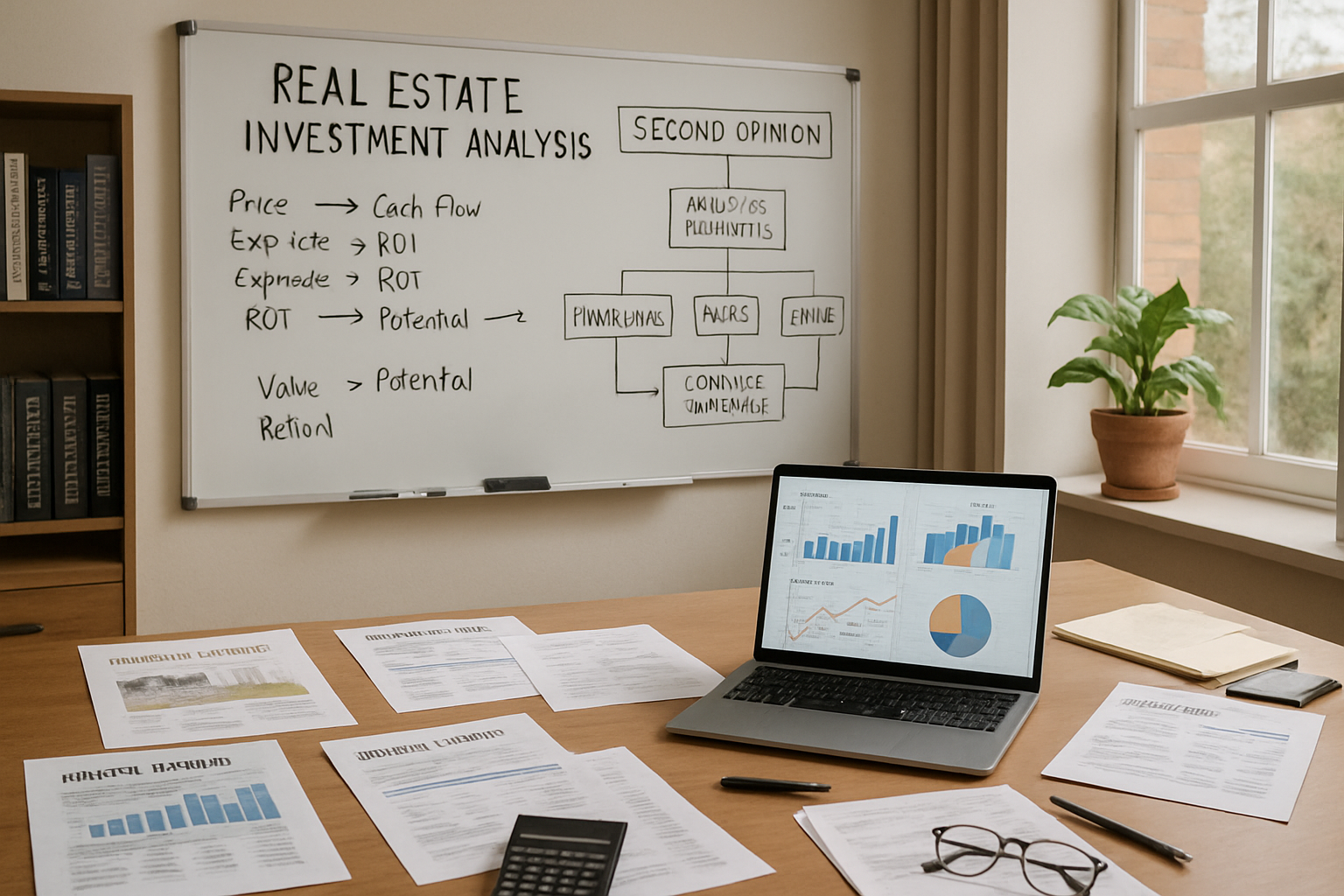
Real estate investment is an effective means of asset building for many individual investors. However, its success depends to a large extent on the right decision at the time of purchase. Because it is an expensive transaction, relying solely on one source of information or one company's opinion carries serious risks. In particular, the use of a "second opinion" to seek an objective opinion on a property under consideration by another company is essential to avoiding this risk and increasing the probability of a successful investment.
This article focuses on the importance of second opinions in real estate transactions and explains specific ways to utilize them. From how to recognize the reliability of rent rolls to expert advice on purchasing decisions, we provide practical knowledge to help you avoid overpricing and purchasing distressed properties.
What is a second opinion?
A second opinion is a concept originally used in the medical field and refers to the act of seeking a second opinion from a doctor other than your primary physician. Applied to real estate investment, it can be defined as " seeking an objective opinion or evaluation from a third-party expert who is different from the real estate agent with whom you are currently considering a transaction.
The role of a second opinion in real estate investment is not merely to determine whether a property is good or bad. There is value in the process itself of verifying whether the information presented by the seller or broker is based on objective facts and whether the conditions are truly advantageous to the investor. This eliminates information asymmetry and enables safer and more rational investment decisions to be made.
In the medical field, seeking a second opinion can improve the accuracy of a diagnosis and select the best treatment. Similarly, in real estate investment, the accuracy of investment decisions can be dramatically improved by aggregating the opinions of multiple experts.
Why is a second opinion essential for real estate investment now?
While the real estate market is booming, there is no end to cases where investors end up signing contracts under unfavorable conditions. There are three main risks behind the necessity of a second opinion. 1.
1. risk of being overpriced
Judging whether a property price is fair or not is the first gateway to the success or failure of a real estate investment. In particular, the vendor on the seller's side naturally wants to sell at as high a price as possible. As a result, a price that deviates from the market price or the profitability of the property may be quoted. Third-party experts evaluate the appropriateness of the price based on objective market data and contract examples from a disinterested standpoint, thereby preventing the risk of overpricing.
Particularly in rural areas, the market lacks transparency, making it difficult to determine a fair price. Unlike in urban areas, there is a limited number of contracted cases that can be compared, and it is not uncommon to purchase a property at the seller's asking price. Under these circumstances, the value of a second opinion is even greater. 2.
2. lies hidden in the rent roll (list of rents)
The rent roll is one of the most important documents in evaluating the profitability of a property. However, there are many cases where the rent roll is intentionally set high. For example, the technique is to state an "estimated rent" that is higher than the market rate, or to pretend that the property is fully occupied based on information on tenants who were brought into the property through a temporary campaign. A real estate professional can determine whether a rent roll is trustworthy by carefully examining the surrounding rent market, vacancy rate, and tenant demographics.
| Item | Description |
|---|---|
| Comparison with the surrounding market | Are the rents not outstandingly high compared to similar properties in the neighborhood? |
| Concentration of Occupancy | If a large number of tenants move in at a particular time, suspect the possibility of a temporary campaign, etc. |
| Variation in rents | If there is a large difference in rent for the same floor plan, check the reason for the difference. |
| Existence or non-existence of free rent | If there is a lot of free rent (free rent for a certain period of time) in order to make rents appear high, check whether it is the case. 3. |
3. hidden defects and regulatory issues
A property may have hidden physical defects (e.g., leaks, termite damage, etc.) or legal problems (e.g., cannot be rebuilt, overflows the floor-area ratio, etc.). These "hidden defects," if discovered after purchase, can lead to large repair costs and a decline in property value. By seeking a second opinion, a specialist can examine the property survey report, certified copy of the registry, and other documents to identify risks that are often overlooked by the layperson.
In particular, problems with existing nonconforming properties due to revisions to the Building Standards Law and floor-area ratio restrictions due to changes in urban planning can be irreversible if noticed after the purchase. Expert knowledge is essential in assessing legal risks.
Specific Use of a Second Opinion
So how should you actually use a second opinion? Here are three concrete steps.
1. detecting lies in rent rolls
As mentioned above, a close examination of the rent roll is extremely important. Once you have obtained a rent roll for the property you are considering, you should first check the above checkpoints yourself. However, it is wise to defer to an expert to make the final decision. A real estate agent is familiar with the market rents and demand trends in the area, and can therefore create an income simulation based on the actual situation, not a theoretical one.
In particular, if the presented rent rolls show revenues at "estimated full occupancy," it is necessary to make realistic revenue projections that take into account actual vacancy rates. Many investors believe the figures as presented, but this is a big mistake. A 1% difference in the vacancy rate can change the annual income by several hundred thousand yen.
2. make the most of free assessments
In recent years, there has been an increase in the number of highly accurate appraisal services that utilize AI technology and an abundant database of closed cases. Simply using multiple valuation services and checking to see if there are any large discrepancies in the prices presented is very effective as an objective decision-making tool. This allows you to screen at an early stage to see if the seller's asking price is within a reasonable range. 3.
3. "What do you think of this property?" and ask honestly
Finally, the most important thing is to frankly ask a trusted professional, "What do you think of this property? A disinterested third party can honestly point out the potential disadvantages and risks as well as the advantages of the property. Professional opinions such as "I would not buy at this price," or "There are better properties in this area," are the most valuable information for making a calm purchase decision. In order to prevent overpricing or purchasing a distressed property with little future potential, please have the courage to knock on the door of an expert.
At this stage, it is important to consider not only the mere evaluation of the property, but also its consistency with the investor's own investment objectives and financial plan. Even an excellent property is not the best investment if it does not meet the investor's objectives. An expert can help you decide whether or not to purchase from this comprehensive perspective.
Conclusion: To be a wise real estate investor
This article has explained the importance of a second opinion in real estate investment and its specific use. Finally, we reiterate the main points.
The success of a real estate investment is determined by the decisions made at the time of purchase. It is extremely important to have an objective viewpoint without relying on a single source of information.
A second opinion is an essential tool for risk avoidance. It prevents risks such as overpricing , rent roll lies, and hidden defects.
Proactively utilize the expertise of an expert. Through free appraisal and purchase consultation, you can eliminate information asymmetry and make rational decisions.
Real estate investment should never be "left to the vendor. In order to protect and steadily grow your own assets, investors themselves must be proactive in gathering information and making decisions. If you have even the slightest concern or doubt about the property you are currently considering, we recommend that your next action should be to first consult with a trusted third-party professional.
Frequently Asked Questions (Q&A)
Q1: When is the most effective time to request a second opinion?
A1: At any time prior to entering into a purchase agreement. Ideally, it is before or after the purchase certificate is submitted and during negotiations. It is most effective to use the consultation at the final stage of decision-making, as it is difficult to overturn a contract if you consult after the contract has been signed.
Q2: Is there a fee for consultation?
A2. It depends on the content of the consultation and the client. There are many experts, such as our company, that offer initial consultations and simple assessments free of charge. When requesting a detailed property survey or consulting, a fee is generally charged. It is a good idea to first take advantage of the free consultation and determine whether the specialist is trustworthy.
Q3: Isn't it disrespectful to the broker who introduced me to the property?
A3. No problem at all. The wiser investor understands the importance of seeking objective opinions from multiple sources. In fact, if a brokerage firm is reluctant to seek a second opinion, you may want to carefully consider doing business with that firm itself. It is a legitimate act to protect your own assets.
Q4. What should I do if the second opinion tells me that I should not buy?
A4. We recommend that you respect that expert's opinion. In particular, if the suggestion is based on specific data or reasons, the risk of the property is considered to be quite high. Even if you have once passed on a property, there is a good chance that a better one will become available. Do not be hasty and wait to meet a property that you are satisfied with, as this will lead to long-term investment success.
Q5: If I ask several experts for a second opinion, is it possible for them to have different opinions?
A5: It is possible. In such cases, carefully check the basis for each expert's opinion and consider which opinion is based on more objective data. If there are multiple opinions, the property may contain some difficult-to-judge factors. This is precisely the type of case that requires careful consideration.
The Landlord Association (INA Network) operated by INA & Associates, Inc. is happy to answer any questions from our members regarding real estate, as long as you follow our rules. If you are seeking more in-depth knowledge and specific advice on individual cases, please consider joining our association. Let's learn together and become successful real estate investors.

Daisuke Inazawa
Representative Director of INA&Associates Inc. Based in Osaka, Tokyo, and Kanagawa, he is engaged in real estate sales, leasing, and management. He provides services based on his extensive experience in the real estate industry. Based on the philosophy that “human resources are a company's most important asset,” he places great importance on human resource development. He continues to take on the challenge of creating sustainable corporate value.
.png)