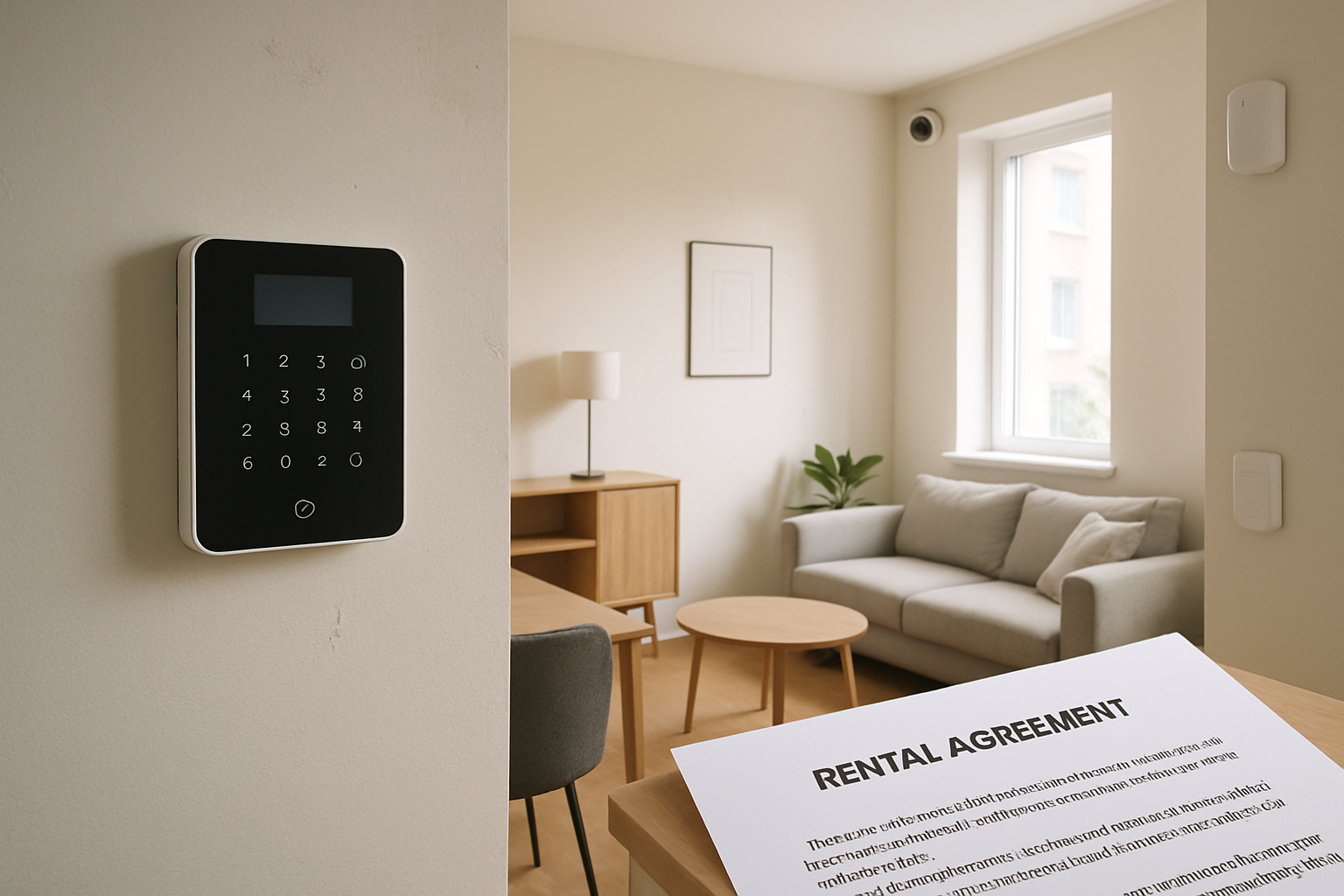
In recent years, with heightened crime prevention awareness, an increasing number of tenants have requested the installation of security systems by security companies in their rental housing. However, this has been accompanied by not a few troubles surrounding the restoration of the property to its original condition when the tenants vacate. In particular, installation of a security system may involve drilling holes in walls and wiring work, and it is an important question for owners as to who will bear the restoration costs. This article provides a detailed explanation from an expert's perspective of the basic concept, legal background, and practical measures regarding the burden of restoration costs when installing security systems in rental housing.
Basic Concept of Restoration to the Original Condition upon Installation of a Security System
Restoration to the original condition in a lease contract refers to the obligation to restore damage to the building caused by the tenant's intentional or negligent actions when the tenant moves out. This does not include wear and tear caused by age or normal use (normal wear and tear). However, the installation of a security system is likely to fall under the category of "alteration" that modifies the structure of the building, such as drilling into walls or wiring work, and is not considered normal wear and tear. Therefore, as a general rule, the resident who installed the security system is responsible for the restoration costs.
The Ministry of Land, Infrastructure, Transport and Tourism's "Troubles and Guidelines Concerning Restoration to the Original Condition" also states that the tenant is not required to bear the restoration costs for wear and tear (normal wear and tear and age-related changes) that occurs during the tenant's normal living and usage, as such wear and tear is included in the rent. However, this does not apply to the installation or replacement of equipment at the lessee's request, such as the installation of a security system.
Rules and Legal Basis for Burden of Restoration Costs
When allowing the tenant to install a security system, it is extremely important to clearly stipulate the burden of restoration costs as a special clause in the lease agreement. The Supreme Court has ruled that a covenant requiring the lessee to bear the cost of repairing normal wear and tear is valid if certain requirements are met. However, in order to be recognized as valid, the following two requirements must be met.
- There must be objective and reasonable reasons for the covenant, such as that the covenant is necessary and not outrageous.
- The lessee must be aware that the covenant obligates the lessee to make repairs, etc. that go beyond the normal obligation to restore the property to its original condition.
Specifically, abstract statements such as "the tenant shall bear the cost of repairing normal wear and tear and changes over time" will not be recognized as effective as a covenant. The court will place emphasis on the fact that the lessee entered into the contract with a concrete awareness of the amount to be borne by the lessee at the time of the contract. Therefore, it is essential that the following points be clearly stated in the contract regarding restoration to the original condition following the installation of a security system.
| Items to be described | Example of description |
|---|---|
| Agreement of burden | It is agreed that all restoration costs associated with the installation of the security system shall be borne by the lessee. |
| Scope of expenses | All costs necessary to restore the property to its original condition, including removal of the security system itself and wiring, filling holes in walls and ceilings, replacement of cloth, etc. |
| Clarification of the amount | The lessee shall bear the actual cost of restoring the property to its original condition, up to the amount of ●●●● yen (excluding tax). Alternatively, the lessee shall bear the actual cost based on the estimate of a professional contractor. |
In this way, by specifically defining the scope and amount of the burden (or its calculation method), troubles at the time of moving out can be prevented.
Practical measures that owners should take
When a tenant requests the installation of a security system, the owner is advised to take the following steps
- Confirmation of installation specifications: First, confirm the specific installation specifications of the security system desired by the tenant, using drawings, etc. prepared by the security company. Knowing exactly where and how the equipment will be installed will improve the accuracy of later estimates.
- Estimate of restoration costs: Once the installation specifications are finalized, contact the management company or a construction company with which you have a relationship and request an estimate of restoration costs. At this time, it is necessary to take into account the extent of cloth replacement and the cost of restoring special building materials, if any.
- Present the cost to the resident and reach a consensus: Once an estimate is obtained, present it to the resident as soon as possible. Only if the resident agrees to bear the cost and agrees to pay for the installation should the installation be permitted. Be sure to keep this agreement in writing.
- Adding a special clause to the contract: If there is no special clause regarding restoration to the original condition in the existing contract, clearly state the details of the agreement regarding cost sharing by signing a memorandum of understanding or by other means. In the case of a new contract, include it as a special clause in the contract.
Estimated restoration costs
Depending on the details of the security system installation, costs vary greatly depending on the type and number of devices to be installed and the structure of the building. For example, if there are few holes drilled into the wall and the equipment is mainly of the wireless type, the cost may be relatively inexpensive. On the other hand, if there are many wired devices and they are installed across multiple rooms, the cost tends to be more expensive due to the wider scope of replacement of the cloths.
In particular, replacing the cloth in the stairway area tends to be difficult and expensive to install, requiring scaffolding to be erected. It should also be noted that if the value of the cloth has depreciated due to long-term occupancy (the so-called "Tokyo Rule"), the owner may be limited in the costs he can charge.
Differences in cost burden depending on the type of security system installed
Security systems can be installed in two main types: wired and wireless. The wired type and the wireless type. The characteristics of each and their impact on restoration costs are summarized in the table below.
| Installation type | Characteristics | Impact on restoration costs |
|---|---|---|
| Wired type | Requires wiring through walls and ceilings, and tends to require large-scale installation. High signal stability. | Restoration work, such as drilling holes for wiring and replacing cloth, tends to be complex and expensive. |
| Wireless type | No wiring work is required, and the equipment can be installed simply by setting it down. Minimal installation work is required. | Restoration work is relatively inexpensive because the equipment only needs to be removed. In many cases, the cost is only a few tens of thousands of yen. |
As you can see, restoration costs vary greatly depending on the type of installation, so it is important to confirm which type of security system is desired by the tenant when asking about their preferences. If it is a wireless type, restoration costs will be relatively inexpensive and may be easier to permit.
Importance of Including a Special Clause in the Lease Agreement
In order to prevent problems over the burden of restoration costs, it is essential to include a special clause in the lease agreement. However, simply stating that "the tenant bears the cost of restoring the property to its original condition" may not be legally effective. According to court precedents, the following conditions must be met for a covenant to be valid.
First, the covenant must be necessary and reasonable. The covenant must be based on objective and reasonable reasons for requiring the resident to bear the cost of repairing normal wear and tear. If the work is an alteration requested by the resident, such as the installation of a security system, this condition is likely to be satisfied.
Next is the resident's acknowledgement and consent. It is important that the resident is specifically aware of the nature and amount of the costs to be borne at the time of the contract and agrees to the contract. An abstract description will not be deemed to satisfy this condition.
Furthermore, the specificity of the description is also important. Clearly stating the scope of the burden (removal of the security system itself, removal of wiring, filling in holes, replacement of cloth, etc.) and the amount (maximum amount or actual cost calculation method) will prevent problems later on.
Importance of Cooperation with Management Company
Close cooperation with the management company is essential for the owner to smoothly handle the installation of the security system. The management company understands the needs of tenants through daily interactions with them, and also has detailed knowledge of the structure and characteristics of the building.
When consulted by a resident who wishes to install a security system, the management company is expected to fulfill the following roles. First, to accurately inform the owner of the resident's wishes. Second, to coordinate with the security company to finalize the installation specifications. Third, arrange to obtain an estimate of restoration costs. Fourth, we explain the results of the estimate to the tenants and help them reach a consensus on the cost burden.
The owner should clearly instruct the management company on these roles and regularly check the progress to ensure a smooth response. Also, by establishing in advance with the management company a policy for dealing with the installation of security systems, future problems can be prevented.
Practical measures at the time of moving out
If the installation of a security system is approved and the tenant agrees to bear the cost of restoring the property to its original condition, it is recommended that the following steps be taken when the tenant moves out.
First, check when the tenant gives notice to vacate. Upon receiving the resident's notice to vacate, confirm that the security system has been installed and reiterate the removal and restoration of the security system.
Next, the removal work is carried out. We will contact the security company and arrange for the removal of the equipment. It is important to request the presence of the owner or the management company at the time of removal to confirm the removal status.
After that, it is an estimate for restoration work. After removal, we will check the condition of the building and obtain an estimate for the necessary restoration work. At this time, recording photos of the removal will help prevent problems later on.
Finally, the restoration work is implemented and the costs are settled. Based on the estimate, the restoration work will be performed and the cost will be charged to the tenant. If the tenant has left a security deposit, the restoration costs are deducted from the deposit and the remaining amount is generally refunded.
Frequently Asked Questions
Conclusion
While requests from tenants for installation of security systems can lead to improved property security, they can also be a cause of trouble over restoration to the original condition. As an owner, you must first understand that the installation of a security system constitutes an "alteration" to the building, and that, in principle, the tenant will be responsible for the restoration costs. The most important thing is to clearly stipulate the rules regarding the cost burden as a special clause in the lease agreement, and to form a clear agreement with the tenants.
In order to prevent problems and continue smooth rental management, please refer to the legal basis and practical measures explained in this article and be sure to take appropriate measures. If you have any questions, it is also effective to consult with experts such as management companies or lawyers, etc. If you join INA Network (Landlord Association), we will answer all such questions as long as you follow the rules.

Daisuke Inazawa
Representative Director of INA&Associates Inc. Based in Osaka, Tokyo, and Kanagawa, he is engaged in real estate sales, leasing, and management. He provides services based on his extensive experience in the real estate industry. Based on the philosophy that “human resources are a company's most important asset,” he places great importance on human resource development. He continues to take on the challenge of creating sustainable corporate value.
.png)