In real estate management, reducing vacancy periods is an important issue that affects profitability. Many owners are taking various measures to reduce vacancy, but what is often overlooked is the quality of the property photos.
Most property searches today begin on the Internet. Among the many properties available, the first thing a customer sees is the property photo, and that first impression greatly influences whether or not the property will lead to a viewing.
In this article, we will explain, from the perspective of a professional who has handled numerous properties, specific techniques for photographing properties to capture the hearts and minds of customers and maximize response, while also providing expert knowledge.
Why are property photos important?
On property information websites, customers are searching for properties that match their preferences from a vast number of listings. It is said that they spend only a few seconds deciding whether or not to click on the first page and check the details.
To capture interest in this short amount of time, attractive and informative photos are essential. High-quality photos can be a powerful weapon in differentiating a property from the competition by accurately conveying the value of the property and raising the customer's expectations, leading to the concrete action of making a viewing appointment.
In fact, there are numerous data showing that improving the quality of photos has resulted in higher click-through rates on websites, resulting in a significant improvement in the number of viewings and closing rates. This suggests that photos are not just a record of the property, but a "presentation" to the client.
| Quality of Photos | Click-through rate | Reservation rate for viewings | Consideration |
|---|---|---|---|
| Low (dark/opaque) | Low | Low | The appeal of the property is not conveyed, and it is easy to be excluded as a candidate |
| Medium(Standard) | Standard | Standard | Difficult to differentiate from other properties, and difficult to leave a lasting impression |
| High (bright and attractive) | Improvement | Improvement | Increased expectations of the property and strong motivation to view the property |
Basic Concept of Photographs that Attract a Response
In order to take photos that generate a response, it is necessary to have a strategic viewpoint, not just to take beautiful photos. The key is to clarify "to whom," "what," and "how" you want to communicate.
You need to envision the target tenant demographic (singles, families, students, etc.) and use photos to express the "strengths" of the property that these demographics will find attractive.
For example, if the property boasts of abundant sunlight, aim to take photos at times of the day when there is abundant natural light. If the property boasts a large amount of storage space, the photos should be composed in a way that conveys the size of the closets and storage space. In this way, intentionally incorporating the selling points of the property into each photograph is the key to winning the hearts and minds of customers.
Practical tips for photographing properties
In this section, we will explain specific photography techniques for "exterior" and "interior" photography. Expensive equipment is not necessary. Even with a smartphone, it is possible to take professional-quality photos by following a few key points.
Points to keep in mind when taking exterior photos
The exterior photograph is an important image that serves as the "face" of the property. Be conscious of conveying not only the overall image of the building, but also the atmosphere of the surrounding environment.
| Key Points of Photography | Specific techniques and explanations |
|---|---|
| Weather and time of day | The best time to take pictures is in the morning on a sunny day (around 10:00 to 14:00). A blue sky in the background makes buildings look more attractive and gives the impression of brightness and cleanliness. Avoid backlighting and shoot with the sun in the background. |
| Shooting Angles | In addition to shooting from the front of the building, shooting from a slight angle can help express a sense of three-dimensionality and depth. If possible, shoot from the opposite side of the street so that the entire building is well balanced. |
| Maintaining horizontality and verticality | If a building appears to be tilted, it gives an unstable and cluttered impression. Use the camera's grid line function, for example, to ensure that the building is level with the ground and perpendicular to the pillars. |
| Organize information on the surrounding area | Devise angles so that garbage collection points, unnecessary power lines, other passersby, etc. do not appear in the image. It is also important to "subtract" to maximize the appeal of the building. |
Key Points for Interior Photography
Interior photographs are the most important element in helping the client visualize the rooms in which he/she will be living. Be sure to take photos that maximize the role and appeal of each room.
| Shooting Location | Specific techniques and explanations |
|---|---|
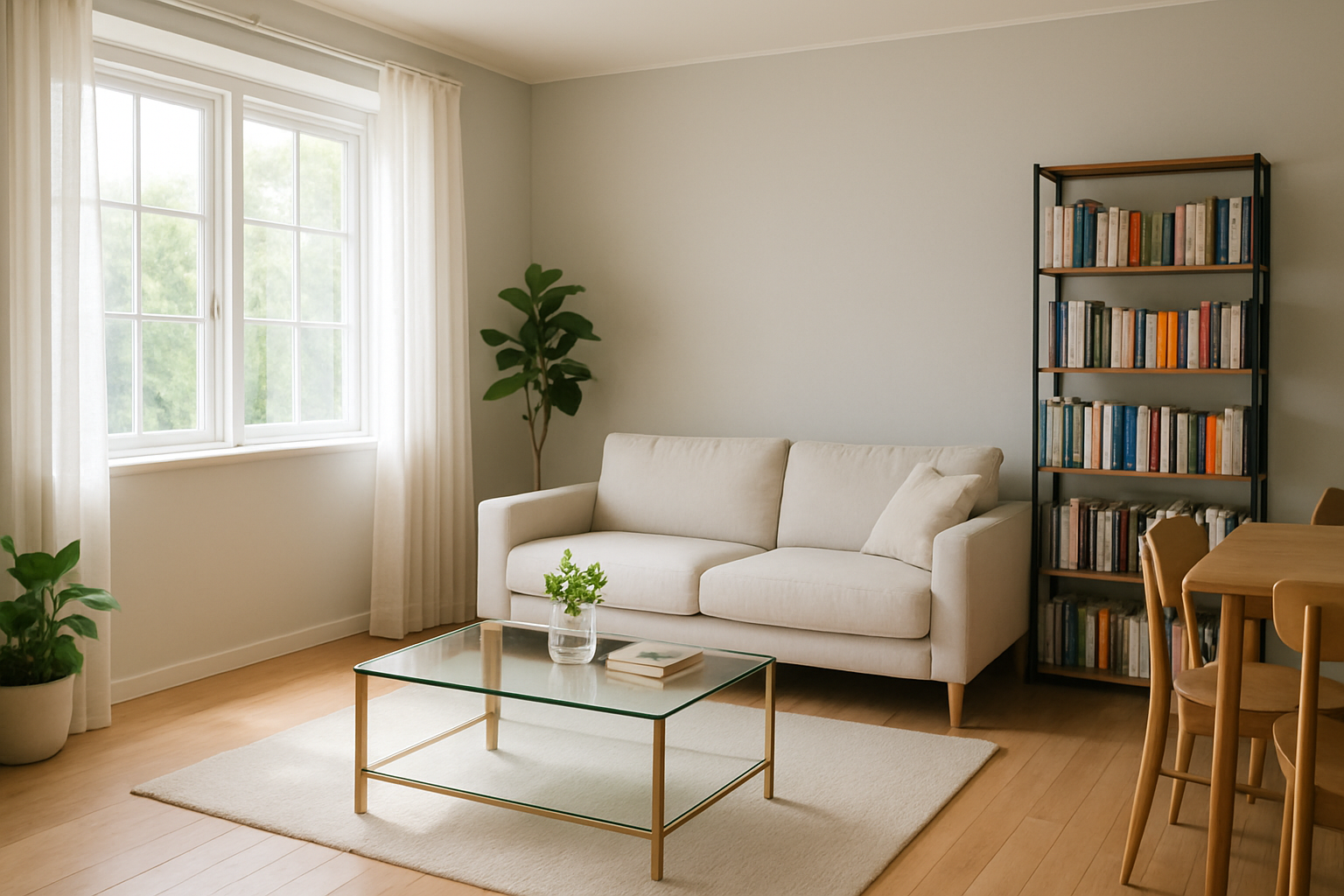
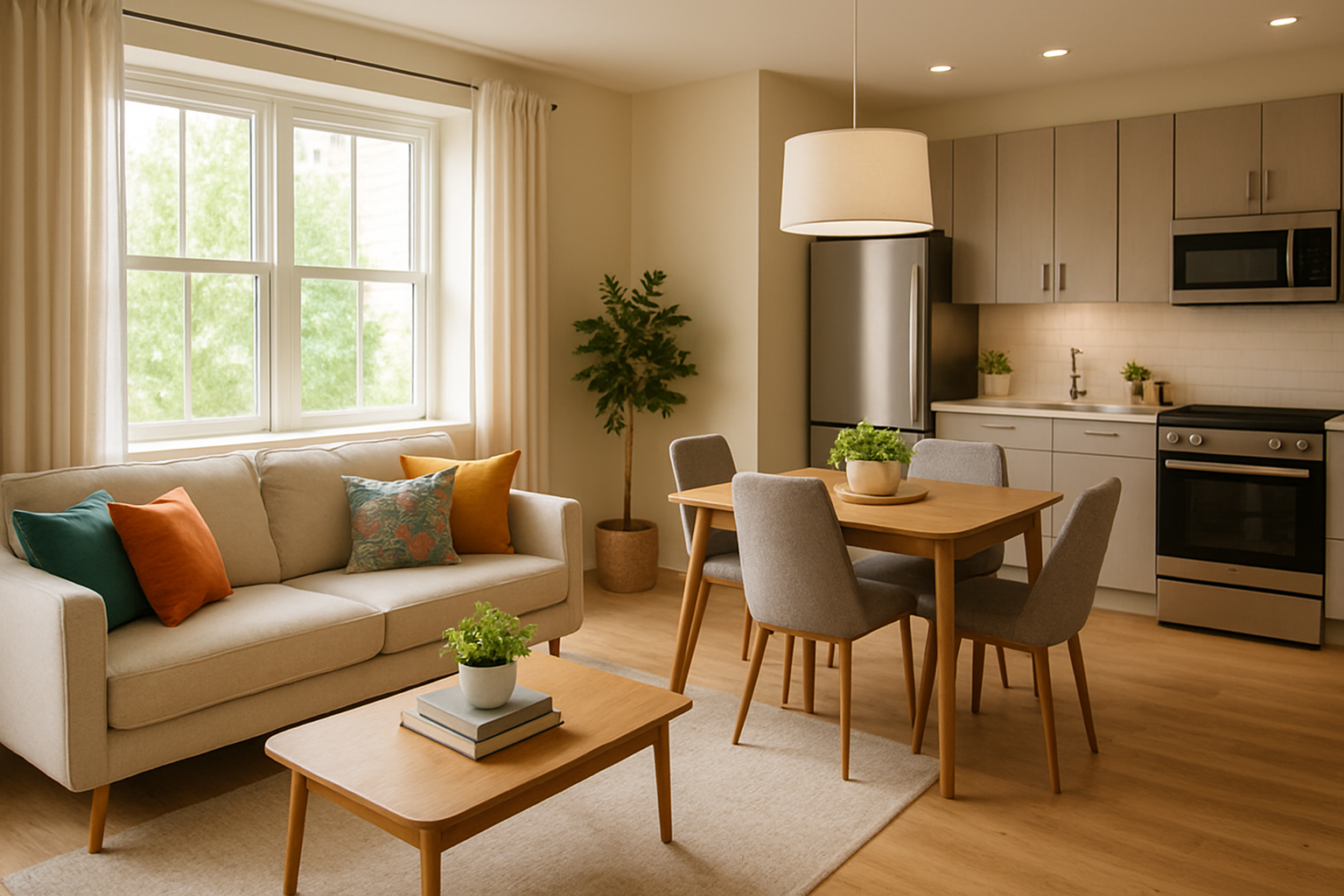
| Living room / living room | Shooting from a diagonal corner of the room will give the room the widest possible view. Shooting at a height of about 1m to 1.5m from the floor, close to the human eye level, will give a natural impression. Be sure to turn on all the lights, and also bring in natural light from windows to ensure brightness. |
| Kitchen | Cleanliness is the first priority. Thoroughly clean the sink and stove area before shooting. Adding a photo of open storage doors will show off the high level of storage capacity. Adjust the angle of metal parts such as faucets and sinks so that they do not reflect too much light. |
| Bathrooms and toilets | Use of a wide-angle lens or panoramic function is effective. To create a clean look, wipe off water droplets and dirt completely. It is good manners to photograph with the toilet seat lid closed. |
| Storage | Open the door and photograph to show the depth and shelf arrangement. Empty the interior to accurately convey the storage capacity. |
| Windows and balconies | If there is a good view from a window, we will photograph that view as well. To convey the size of the balcony, it is helpful to photograph it from an angle that shows its depth, and to include facilities such as a clothes-drying pole holder. |
Photographing devices that can be used with a smartphone
| Devices | Explanation |
|---|---|
| Use of HDR function | Even in a room with large differences in brightness and darkness, it is possible to suppress white-outs and black-outs and take photos with well-balanced brightness. |
| Grid line display | Very effective as an aid line for accurate horizontal and vertical alignment. |
| Exposure Compensation | Tap the screen to adjust the brightness. By setting a slightly brighter setting, the entire room will look brighter and cleaner. |
| Wide-angle lens | A retrofit wide-angle lens for smartphones can be very effective in capturing a wide view of the entire room, even in a small space. |
Cautions for Photo Processing
Processing photos to make them look more attractive is effective, but excessive processing may be considered "bait advertising. The "Fair Competition Code Concerning Representation of Real Estate" established by the Federation of Real Estate Fair Trade Councils prohibits representations that misrepresent facts.
Examples of good processing include adjusting the overall brightness of the photo, correcting color, and correcting horizontal and vertical distortions.
On the other hand, processing that should be avoided is processing that makes the property appear different from reality, such as erasing power lines or neighboring buildings, completely erasing scratches or stains, or placing CG furniture to mislead the viewer into thinking the property is "furnished. It is important to limit the correction to making the property look better than it is.
Use of Photos as a Strategy to Differentiate from Competing Properties
Property portal sites list many properties with similar conditions. In order to have your property selected among them, it is extremely important to differentiate your property by its photograph.
Not only do you need to post beautiful photos, but you also need to have a point of view that conveys the "unique value of this property" in the form of a story.
For example, if the target audience is "looking for a quiet environment in which to concentrate on remote work," photos that show a study space and a quiet surrounding environment may be appropriate. and photos of nearby parks.
| Points of differentiation | How to express yourself through photos |
|---|---|
| Clarify the concept | Define the concept of the property, such as "for singles who live actively in the city center" or "for families who want to raise their children in an environment rich in nature," and focus on photos that match the concept. |
| Lifestyle proposals | Furniture and accessories are effectively arranged (home staging) to create a concrete image of a rich lifestyle after moving in. For example, a balcony with tables and chairs to create a café-like atmosphere. |
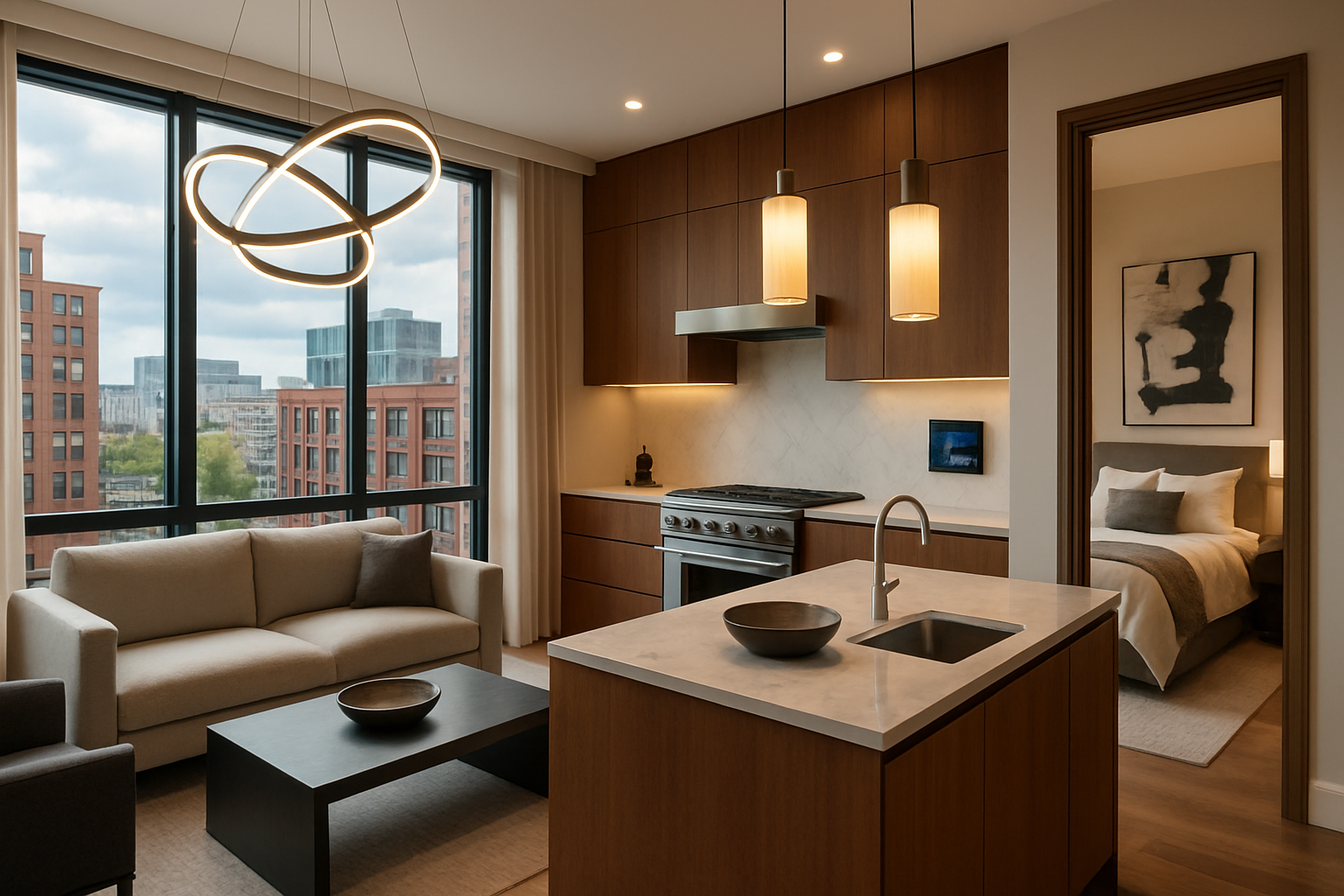
| Emphasize unique strengths | Highly designed lighting fixtures, state-of-the-art facilities, abundant storage, and other "strengths" not found in other properties are captured from multiple angles and accompanied by detailed captions to appeal to the viewer. |
Use of Video and 360-degree Cameras
In recent years, there has been a growing demand for "online previews" that utilize video and 360-degree cameras in addition to still images. These contents can intuitively convey room size, flow lines, and spatial connections that are difficult to convey with still images alone, thereby deepening the customer's understanding and reducing mismatches after the viewing.
Video: By filming from the perspective of actually walking through the room, a more realistic viewing experience can be provided. In particular, showing a series of the living room, kitchen, and balcony on video is very effective in evoking the customer's image of what they will see when they move in.
360-degree camera: This allows the customer to view the area of interest from any angle, providing highly satisfying information. This is especially effective for properties with complex floor plans or when you want to convey the expanse of space.
By proactively incorporating these new technologies, you can reach more potential customers and brand not only the property but also the owner himself/herself as an owner who is making progressive efforts.
Conclusion
In this article, we have explained the importance of property photos that generate a response, specific photography techniques, and points to keep in mind.
Property photos are the first entry point for customers to imagine their future life. By having an intention and strategy for each photo, you can maximize the appeal of the property and differentiate it from competing properties.
The techniques we have described in this article can be implemented immediately. Try them out on your own managed properties and experience how changes in the quality of your photos can lead to a positive response.
Photography skills will undoubtedly become a powerful weapon in your future real estate management.
Frequently Asked Questions
Q1: Do I need an expensive camera?
A1: Not necessarily. Smartphones nowadays have very high camera performance, so if you follow the basics described in this article, such as "keeping the camera horizontal and vertical," "ensuring brightness," and "composing the picture," you can take sufficiently attractive photos. Please try it first with your smartphone.
Q2: How many photos is appropriate?
A2: It is difficult to say, but it is advisable to include at least one photo of each major room (living room, each room, kitchen, bathroom, and toilet), and at least 15 photos of the exterior, balcony, storage, view, and common areas (entrance, delivery box, etc.). The more information you provide, the more likely your clients will feel comfortable and interested in your property.
Q3: Can I take pictures even in bad weather?
A3: We recommend shooting on sunny days whenever possible. The weather can have a big impact, especially on the exterior and in rooms where you want to show off the natural light. If your schedule does not allow for it, you may need to adjust the brightness using image editing software, but it is best to consider reshooting as there is a limit to how natural the results can be.
Q4: Should I place furniture and accessories?
A4: Furniture and accessories (home staging) are very effective in creating a sense of living and helping the viewer to get an idea of the size and use of the room. However, too many things can make a room look smaller, so it is important to keep the arrangement simple and tasteful. It is also a good idea to include photos of the room both as it is vacant and as it will look after staging.
Q5: How much photo manipulation is allowed?
A5: Any modifications to improve the appearance of the photos, such as brightening, color correction, and correction of distortions, are acceptable. However, if you make false statements, such as by removing defects (scratches on walls, stains, etc.) or adding equipment that does not exist, you may be in violation of the Law for Preventing Unjustifiable Extra or Unexpected Benefit and Misleading Representation. Please keep it within the scope of "making the actual property look better".
About INA Network
INA Network," our landlord association, actively shares practical know-how useful for real estate management and exchanges information with other members.
If you join us, we will answer all your questions, provided that you follow the rules. If you are interested, please feel free to contact us.

Daisuke Inazawa
Representative Director of INA&Associates Inc. Based in Osaka, Tokyo, and Kanagawa, he is engaged in real estate sales, leasing, and management. He provides services based on his extensive experience in the real estate industry. Based on the philosophy that “human resources are a company's most important asset,” he places great importance on human resource development. He continues to take on the challenge of creating sustainable corporate value.
.png)