How do property owners utilize the cleaning reports submitted periodically by management and cleaning companies?
In many cases, the reports simply confirm the fact that the property has been cleaned, and the true value of the report is often overlooked.
In fact, a cleaning report is more than just a record of work done; it is an important source of information for maintaining and improving property values.
When properly deciphered, it is valuable data that can be used to make decisions on capital investment, improve resident satisfaction, and even increase the property's asset value.
In this article, we will introduce specific ways to use cleaning reports as "asset improvement proposals" based on our experience in supporting many property owners as INA & Associates, Inc.
What is the true value of a cleaning report?
A "treasure trove of data" that is more than just a record of work
A cleaning report is a valuable database that regularly records the current status of a property.
The information discovered through cleaning operations includes the following important elements
- The state of age-related deterioration of common areas
- Moral and lifestyle patterns of tenants
- External influences (illegal dumping, intruders, etc.)
- Predictors of equipment malfunction
- Seasonal changes and trends
By systematically analyzing this information, various issues in property management can be identified at an early stage and appropriate measures can be taken.
Learning from a real-life example: A case study of a solution to a garbage disposal problem
At one property, there was a problem with frequent vandalism of the garbage disposal area.
The cleaning company not only cleaned the area, but also took pictures from the same angle each time as a fixed-point observation and kept a detailed record of the date, time, and situation.
This continuous reporting revealed the following facts
- There is a certain pattern to the days of the week and times of the week when the area is razed.
- Illegal dumping from outside is the main cause
- Suspicious persons are coming and going at certain times of the day
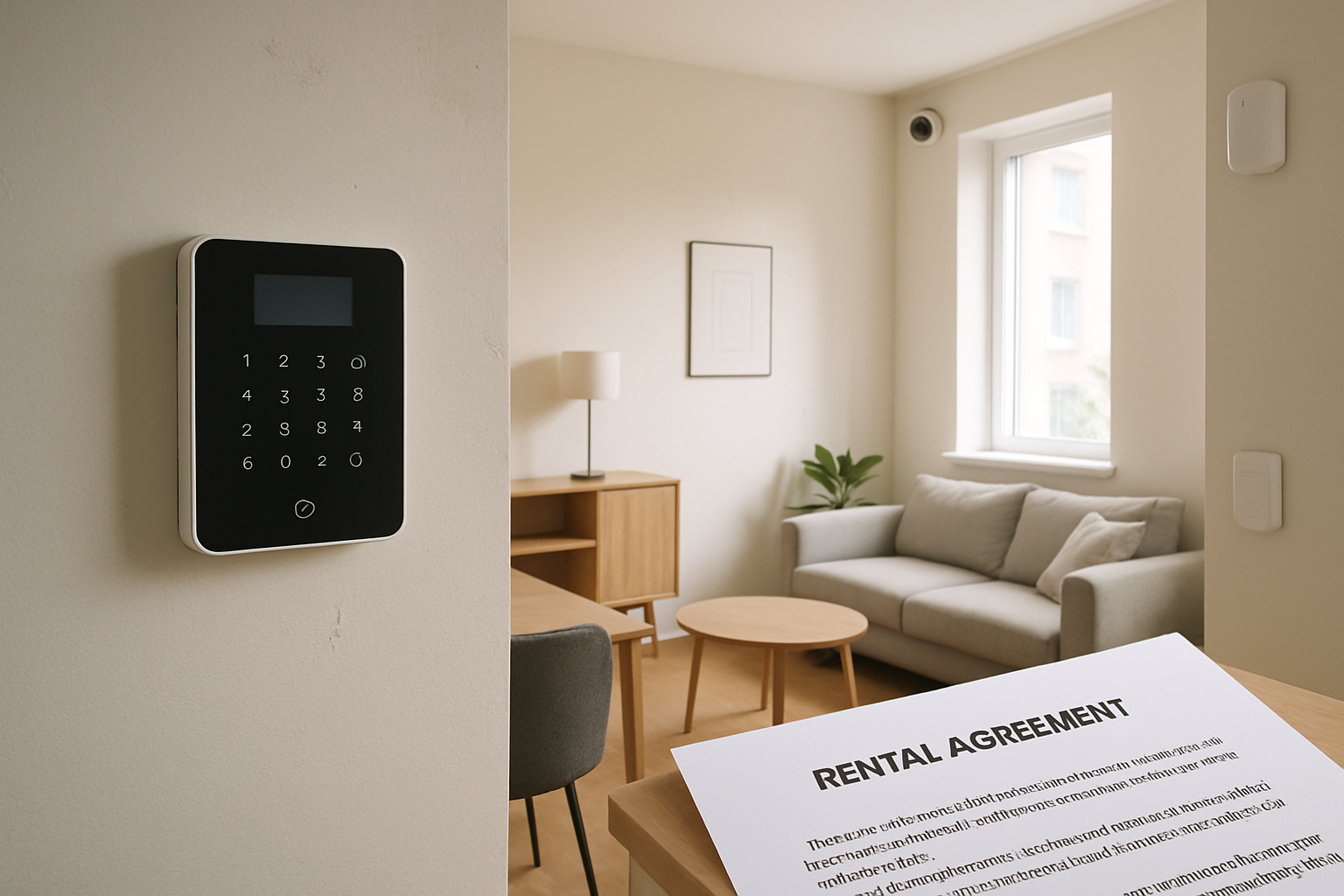
Based on these data, the owner made the investment decision to install surveillance cameras.
As a result, illegal dumping was drastically reduced, complaints from tenants were eliminated, and the property's reputation was improved.
As this example shows, a cleaning report is not just a "record of cleaning," but is important evidence to support investment decisions.
Negative Signs to be Deciphered from Cleaning Reports
What are negative predictive signs?
Negative predictors are signs that may lead to a decline in the property's asset value or a decrease in tenant satisfaction.
The following types of negative omens are recorded in the cleaning report.
Major types of negative predictive signs
| Types of Predictive Signs | Specific examples | Risks of neglect |
|---|---|---|
| Littering | Unsorted garbage, illegal dumping | Decline in tenant morale, increased evictions |
| Overgrowth of weeds | Weeds on the premises, dilapidation of plantings | Deterioration of property image, pest infestation |
| Dirt in common areas | Dirty entrances, dirty stairs | Decrease in prospective tenants, increase in vacancy rate |
| Deterioration of facilities | Non-lighting of lights, clogged drainage | Need for major repairs, risk of accidents |
| Suspicious traces | Graffiti, damage, signs of intrusion | Impression of deteriorating public safety, decline in property value |
What to look for to avoid overlooking signs
When reviewing cleaning reports, pay attention to the following points
1. Repeatedly reported problems
If the same area or the same type of problem is reported repeatedly, the root cause may not have been resolved.
For example, if trash is repeatedly left in a particular location, there may be a problem with the placement of trash cans or signage.
2. Visual changes through photographs
In addition to text, photographic documentation is extremely important.
Fixed-point observation allows you to visually grasp changes over time.
Particular attention should be paid to the following changes
- Changes in the rate of dirt accumulation
- Expansion of damaged areas
- Emergence of new problem areas
3. Changes in cleaning work time
If the normal cleaning work time is increasing, the condition of the property may be deteriorating.
Conversely, if the effects of improvement measures are being shown, the work time may be reduced.
Practical Methods to Utilize Reports for Investment Decisions
Step 1: Systematic organization of data
In order to utilize the cleaning report for investment decisions, it is first necessary to organize the data systematically.
Recommended organization method
| Organizing items | Specific method | Purpose of Utilization |
|---|---|---|
| Time-series management | Monthly and quarterly filing | Grasping changes over time |
| Classification by location | Entrances, garbage storage areas, etc. | Identification of problem areas |
| Classification by problem type | Dirt, damage, illegal dumping, etc. | Prioritization of countermeasures |
| Photo archiving | Chronological storage of fixed-point observation photos | Visual comparative analysis |
Step 2: Analyze the cause of the problem
Once you have identified a problem from the report, the next step is to analyze the cause.
Three perspectives of cause analysis
- Resident Factors: Problems caused by resident morals and lifestyle
- External Factors: Problems caused by illegal dumping or intruders from the outside
- Facility/structural factors: Problems caused by inadequate design or facilities of the property.
For example, when analyzing the causes of a garbage dump, we consider the following
- In case of resident factors: Insufficient awareness of garbage disposal rules, lack of multilingual support for foreign residents
- External factors: Inadequate locking facilities, easy access from the outside
- Equipment and structural factors: Insufficient garbage disposal capacity, poor flow line
Step 3: Investigate return on investment
Once the cause is identified, consider the solution and its return on investment.
Investment Decision Consideration Framework
| Proposed countermeasures | Initial investment | Running cost | Expected Effectiveness | Payback period |
|---|---|---|---|---|
| Surveillance camera installation | From 300,000 yen | 5,000 yen per month (electricity bill) | Prevention of illegal dumping, improvement of resident satisfaction | 2 to 3 years |
| Installation of electronic locks | 150,000 yen~ | 3,000 yen/month (maintenance fee) | Improve security, increase management efficiency | 1 to 2 years |
| Installation of signage and postings | From 30,000 yen | None | Familiarization with rules, deterrent effect | Immediate effect |
| Additional lighting | From 100,000 yen | 2,000 yen/month (electricity) | Improved security, safety at night | 1 to 2 years |
Step 4: CAPEX (capital expenditure) planning
Based on the information obtained from the cleaning report, develop a mid- to long-term capital expenditure plan.
Prioritize CAPEX planning
- Urgent investments: Equipment related to safety and legal compliance
- Investments directly related to improving asset value: Entrances and other areas related to first impressions
- Investments that lead to operational efficiency: management cost reductions and energy-saving equipment
- Investment to improve resident satisfaction: Improvement of comfort in common areas
Practice preventive maintenance using cleaning reports
What is Preventive Maintenance?
Preventive maintenance is the systematic maintenance and repair of equipment and building defects before they occur.
Cleaning reports are one of the most effective tools to realize this preventive maintenance.
The information obtained through regular cleaning operations enables continuous monitoring of the property's condition and early detection of signs of problems.
Economic Benefits of Preventive Maintenance
Proper implementation of preventive maintenance provides the following economic benefits.
First is the avoidance of major repairs.
By detecting and addressing minor problems early, expensive repair costs can be avoided later.
Second, it maintains the property's asset value.
By keeping the property in good condition at all times, the market value of the property can be maintained at a high level.
Third, it improves the retention rate of tenants.
By continuing to provide a comfortable living environment, tenant satisfaction will increase and the move-out rate will decrease.
Seasonal Key Checkpoints
When utilizing the cleaning report, there are different points to focus on for each season.
Spring (March to May): Check for weed growth, condition of plantings, and damage to equipment due to winter freezing.
Summer (June-August): Check for clogged drainage facilities, pest infestation, and conditions around outdoor air conditioner units.
Autumn (September-November): Check for accumulation of fallen leaves, damage after typhoons, and deterioration of exterior walls
Winter (December-February): Check for anti-freezing measures, damage caused by snow accumulation, and operation of heating equipment.
By incorporating these seasonal perspectives into the cleaning report, more effective preventive maintenance can be achieved.
Effective communication with management companies
Requests to improve the quality of the report
The quality of the report can be improved by requesting the following points from the management company and cleaning company.
Recommended report format
| Item | Contents | Importance |
|---|---|---|
| Date and time | Specify the date and time of the work | Required |
| Worked area | Specify the area(s) to be cleaned | Required |
| Details of work | Details of the cleaning work performed | Required |
| Findings | Problems and things noticed | Important |
| Photographic record | Fixed point observation photos (before and after work) | Important |
| Suggestions for improvement | Suggestions for problem solving | Recommendation |
| Time required | Time taken to complete the work | Reference |
Regular on-site checks and feedback
In addition to the report, it is important to regularly check the site and share feedback with the management company.
Effective feedback cycle
- Monthly report review: Review monthly report and list areas of concern
- Quarterly Site Inspection: Visit the site and check for consistency with the report
- Discussion of improvement measures: Discuss improvement measures with the management company and formulate an action plan
- Effectiveness measurement: Confirm the effectiveness of implemented measures in the next report
Report management using digital technology
Use of cloud-based management systems
In recent years, systems that digitize cleaning reports and manage them in the cloud have become popular.
Advantages of Digitization
- Real-time sharing: Reports are immediately shared with owners
- Data analysis: Accumulated data can be analyzed to identify trends
- Photo management: Large numbers of photos can be organized and compared in chronological order
- Alert function: Automatic detection of abnormal values and recurring problems
Linkage with IoT devices
A more advanced approach is to link IoT devices with cleaning reports.
Specific examples of IoT utilization
| IoT devices | Acquired data | Linkage with cleaning reports |
|---|---|---|
| Surveillance camera | Video, human flow data | Identification of time of problem |
| Smart locks | Opening and closing history | Unauthorized entry detection |
| Sensors | Temperature, humidity, illumination | Recording of environmental changes |
| Trash can sensors | Degree of fullness | Optimization of cleaning timing |
Conclusion
Cleaning reports are more than just a record of work done; they are an important source of information for maintaining and improving the property value of a property.
Appropriate use of the report can provide the following benefits.
Main benefits of utilizing cleaning reports
- Early problem detection: Negative signs can be detected early and addressed before they develop into major problems.
- Basis for investment decisions: Enables rational capital investment decisions based on data.
- Increased asset value: Proper preventive maintenance can maintain and increase the asset value of properties.
- Improve resident satisfaction: Maintain a comfortable living environment and increase resident satisfaction and retention
- Optimize management costs: Early detection of problems can avoid major repairs and control costs.
Action Plans You Can Start Today
- Review the past three months' cleaning reports and list any recurring problems.
- Request the management company to submit a report with photos and suggestions for improvement.
- Analyze the causes of problem areas and consider the return on investment.
- Implement the measures in order of priority, and measure their effectiveness.
The results of real estate investment can be greatly enhanced by viewing the cleaning report not as a "record of cleaning" but as a "proposal for asset improvement.
INA&Associates Inc. operates an Oyaokai (landlord association) (INANetwork) for real estate owners.
If you attend the Landlord Meeting, we will answer all your questions about property management and asset management, assuming you follow the rules.
We will share our practical know-how, such as how to utilize cleaning reports and make decisions on capital investment, to help owners increase their property values.
Please feel free to contact us.
Frequently Asked Questions
Q1. How often should I check the cleaning report?
Ideally, the cleaning report should be reviewed each time it is submitted.
We recommend a detailed review at least once a month to identify any problems or changes.
In particular, when a new problem is reported, please make sure to promptly check the site and take action as soon as possible.
Q2. What should I do if the management company's report is too simple?
Please provide the management company with a specific report format and request that the report include photographs and suggestions for improvement.
If necessary, you should consider including the quality of the report as an evaluation item in the management contract.
Management companies that submit high quality reports tend to have a high awareness of property management.
Q3. How should priorities be determined when making investment decisions based on cleaning reports?
Priorities should be considered in the following order: (1) safety and legal compliance, (2) impact on property value, and (3) return on investment.
In particular, issues related to the safety of tenants and issues that, if left unaddressed, could lead to a significant decline in asset value should be given the highest priority.
If the investment is large, obtain multiple estimates and carefully consider cost-effectiveness.
Q4. How much does a digitized cleaning report system cost to implement?
It depends on the system, but in general, the initial cost ranges from 100,000 yen to 300,000 yen, and the monthly fee ranges from 5,000 yen to 30,000 yen, depending on the size of the property.
However, if you can use a system already installed by the management company, you may be able to use the system at no additional cost.
Please check with the management company first.

Daisuke Inazawa
Representative Director of INA&Associates Inc. Based in Osaka, Tokyo, and Kanagawa, he is engaged in real estate sales, leasing, and management. He provides services based on his extensive experience in the real estate industry. Based on the philosophy that “human resources are a company's most important asset,” he places great importance on human resource development. He continues to take on the challenge of creating sustainable corporate value.
.png)